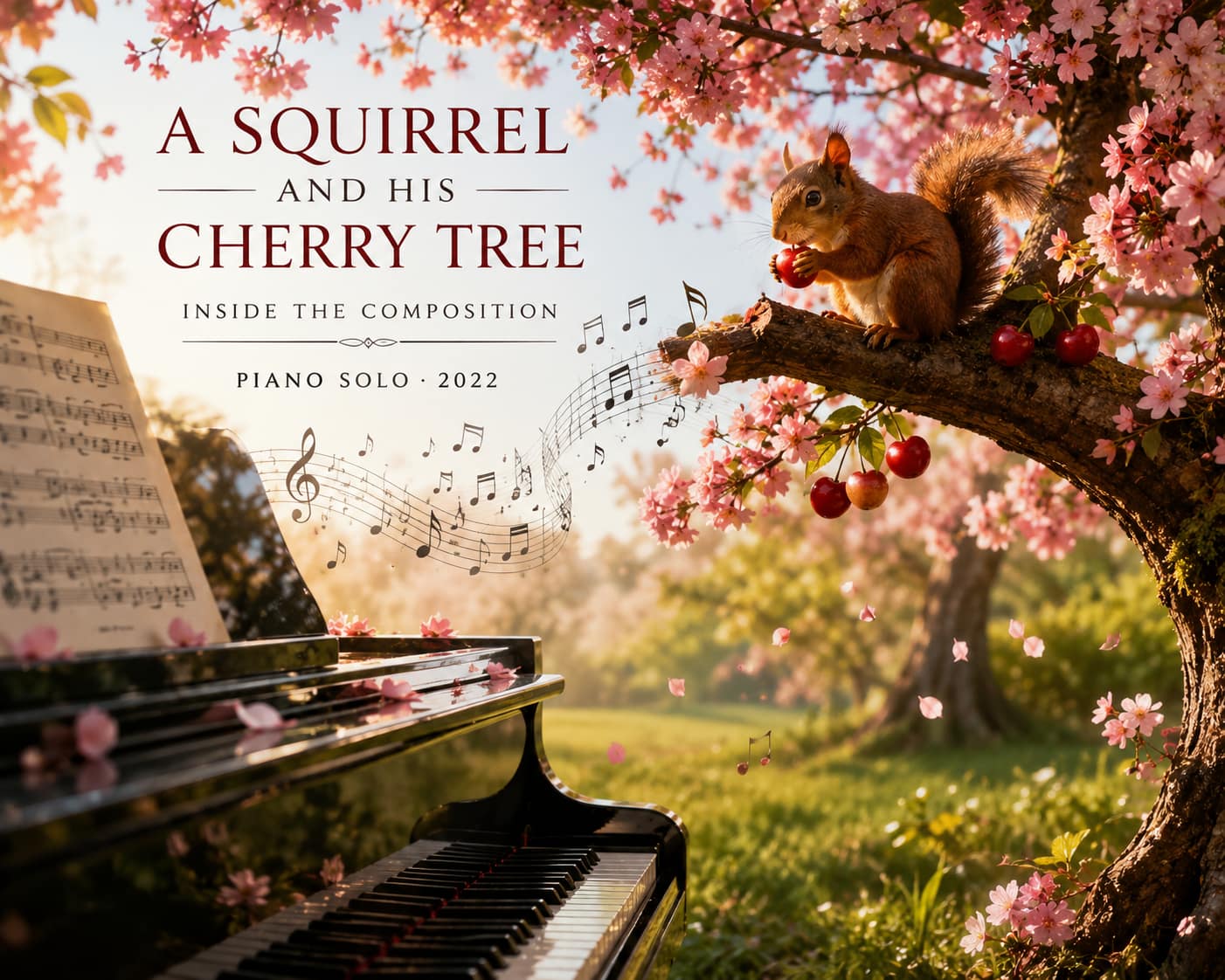
A Squirrel and His Cherry Tree — Inside the Composition

playful piano composition rhythmic motion minimalist neoclassical music

A Squirrel and His Cherry Tree, released in 2022 for solo piano, explores movement, playfulness, and rhythmic vitality through repetitive patterns and bright harmonic motion. The piece is built around a strong rhythmic pulse that remains active almost continuously. Rather than lyrical introspection, the music focuses on agility, momentum, and the unpredictable energy of constant … Read more

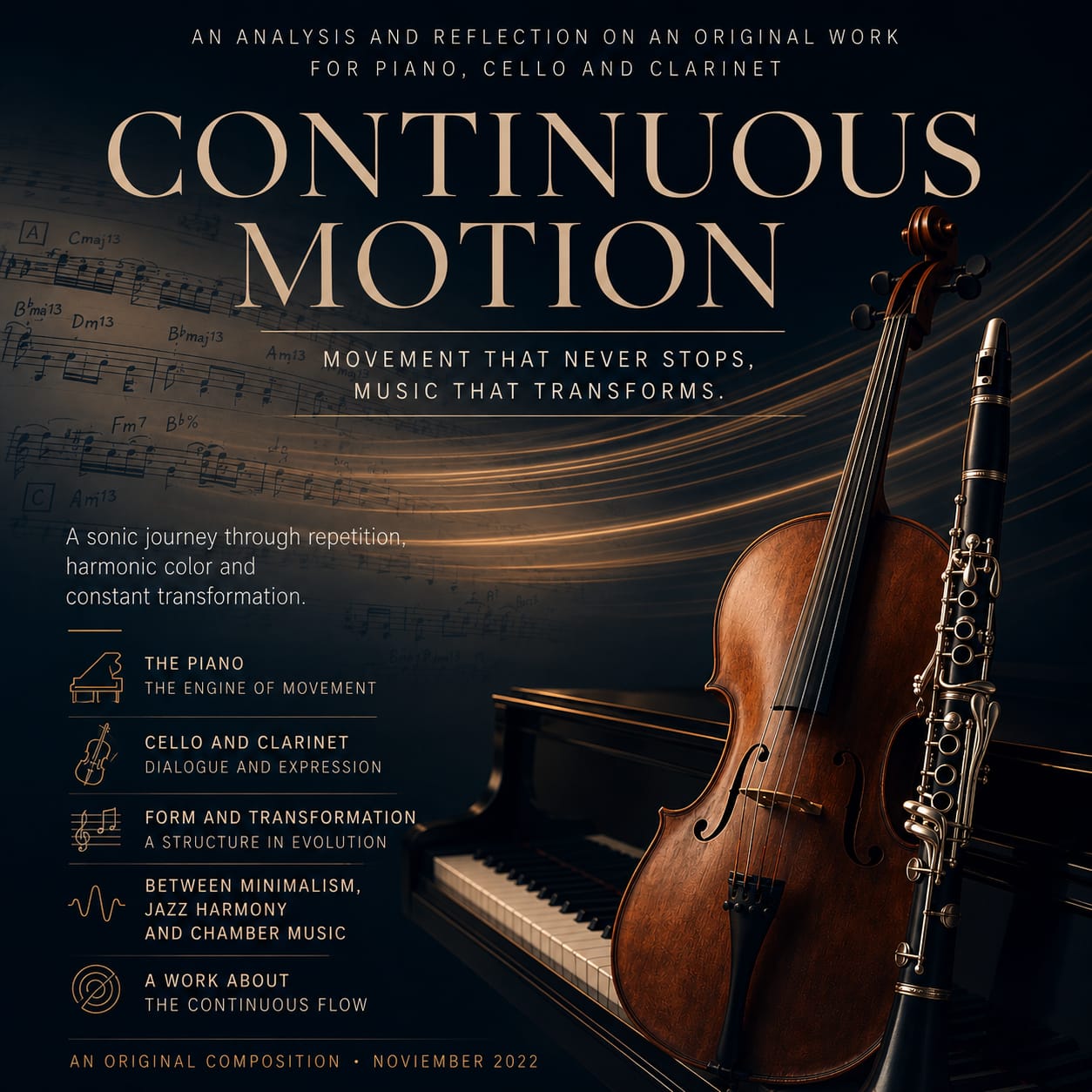
Inside the Music: Continuous Motion

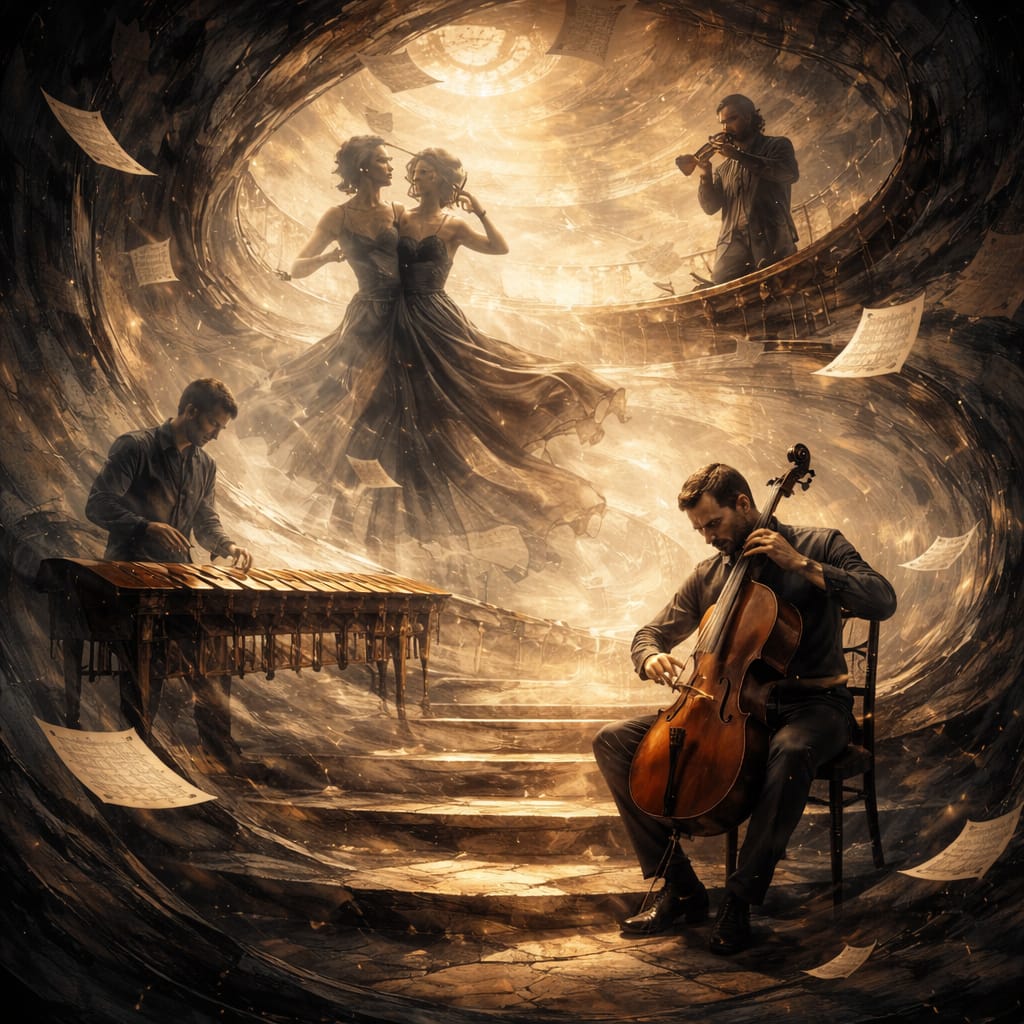
Cover artwork for the article “Inside the Music: Continuous Motion”, featuring piano, cello and clarinet with flowing musical textures and contemporary chamber aesthetics.

There are compositions born from melody, others from harmony, and some from rhythm. Continuous Motion emerged from movement itself: the idea of a musical current that never completely settles, always advancing, transforming, breathing. Written in November 2022 for piano, cello and clarinet, the piece explores repetition, gradual harmonic shifts and the tension between stability and … Read more

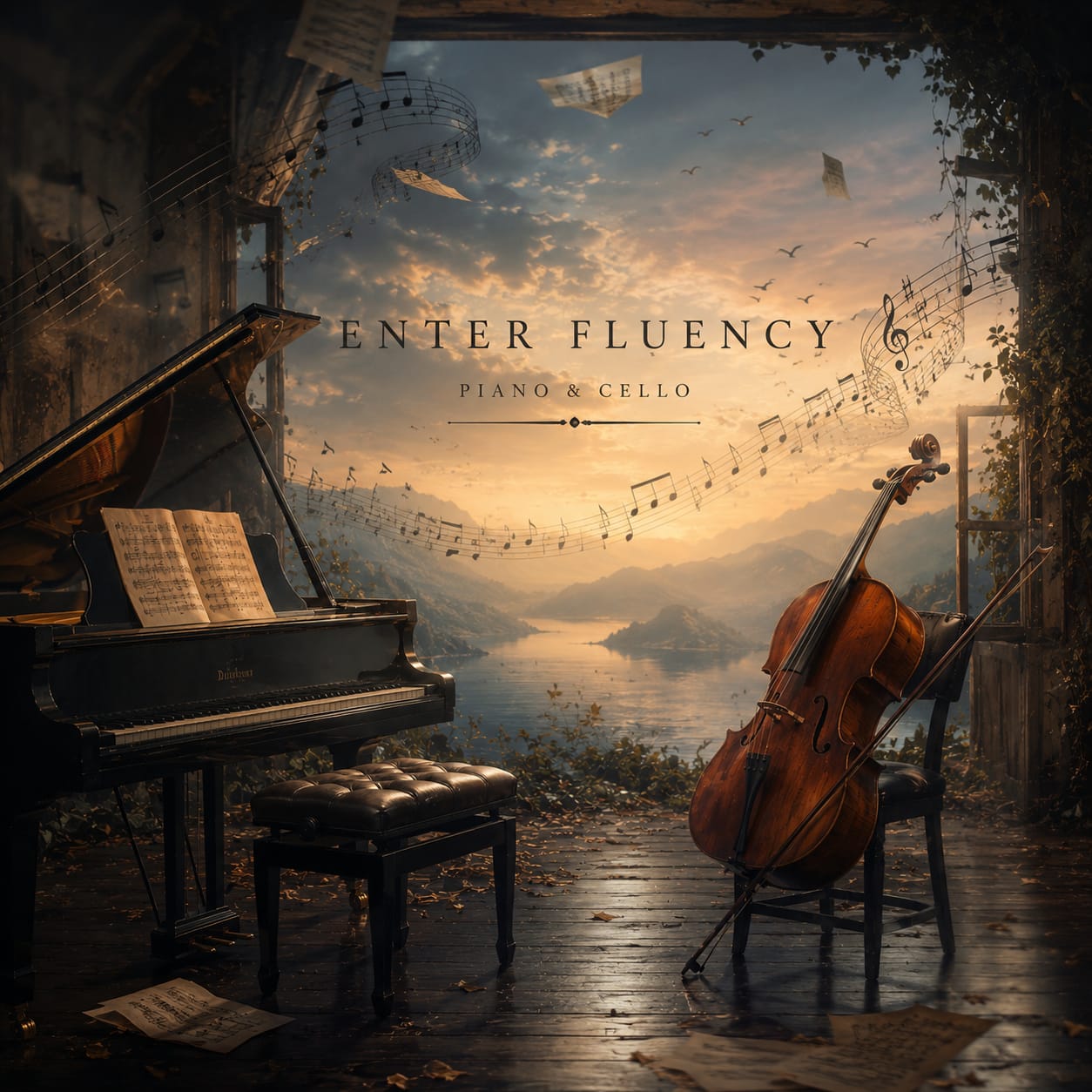
Enter Fluency — Inside the Composition

piano cello continuous motion harmonic flow chamber music composition

Enter Fluency, originally released for solo piano in 2022 and later adapted for piano and cello in the album Piano & Cello Junction, explores continuity through perpetual motion and harmonic transformation. The piece is built around flowing arpeggiated movement that constantly evolves while maintaining a stable pulse. Rather than dramatic thematic development, the music focuses … Read more

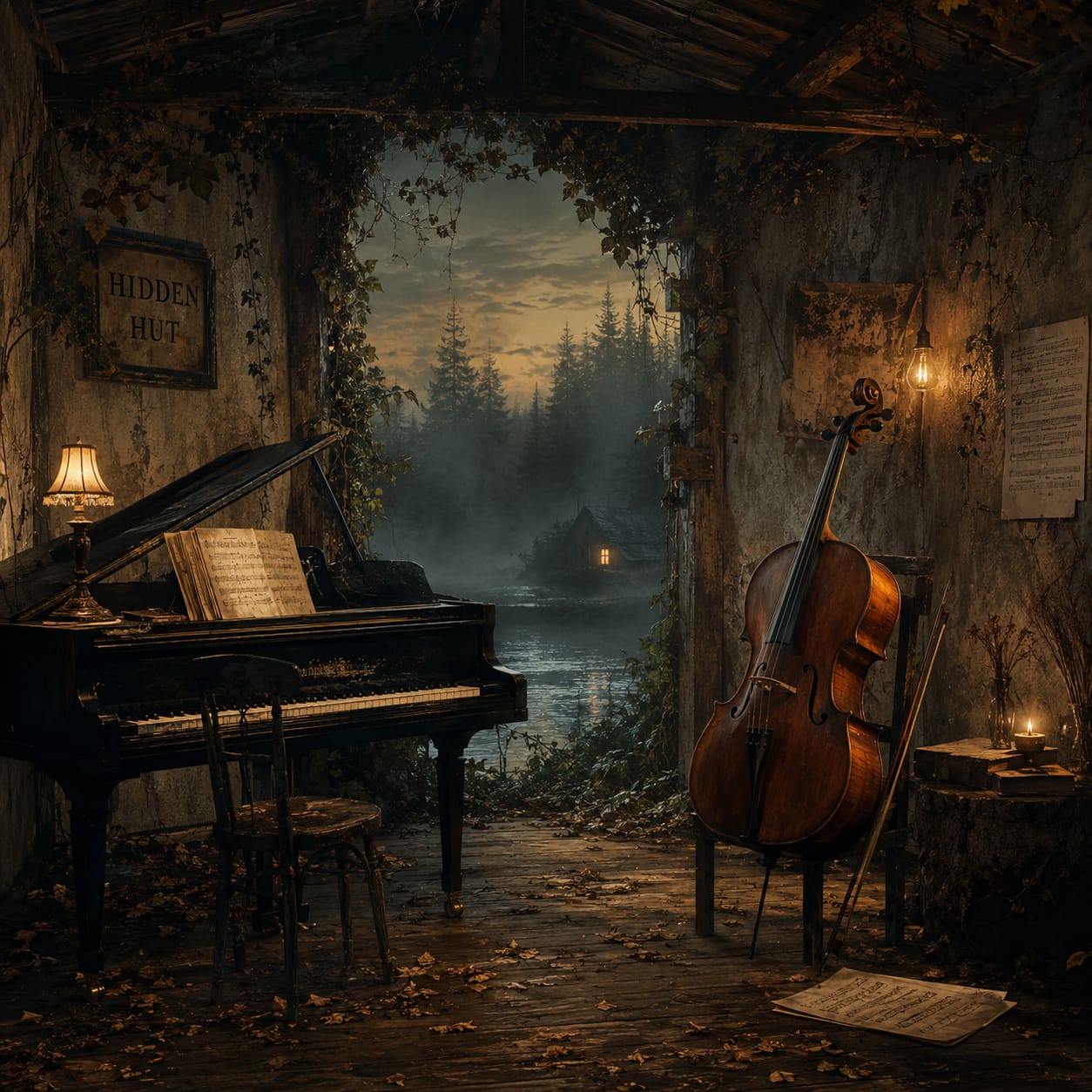
Hidden Hut — Inside the Composition

piano cello chamber music hidden atmosphere harmonic suspension minimalist composition

Hidden Hut, originally released for solo piano in 2022 and later adapted for piano and cello in the album Piano & Cello Junction, explores stillness, distance, and hidden spaces through harmonic suspension and gradual motion. Unlike tension-driven works, this piece focuses on containment. The music moves carefully, as if revealing a place that remains partially … Read more

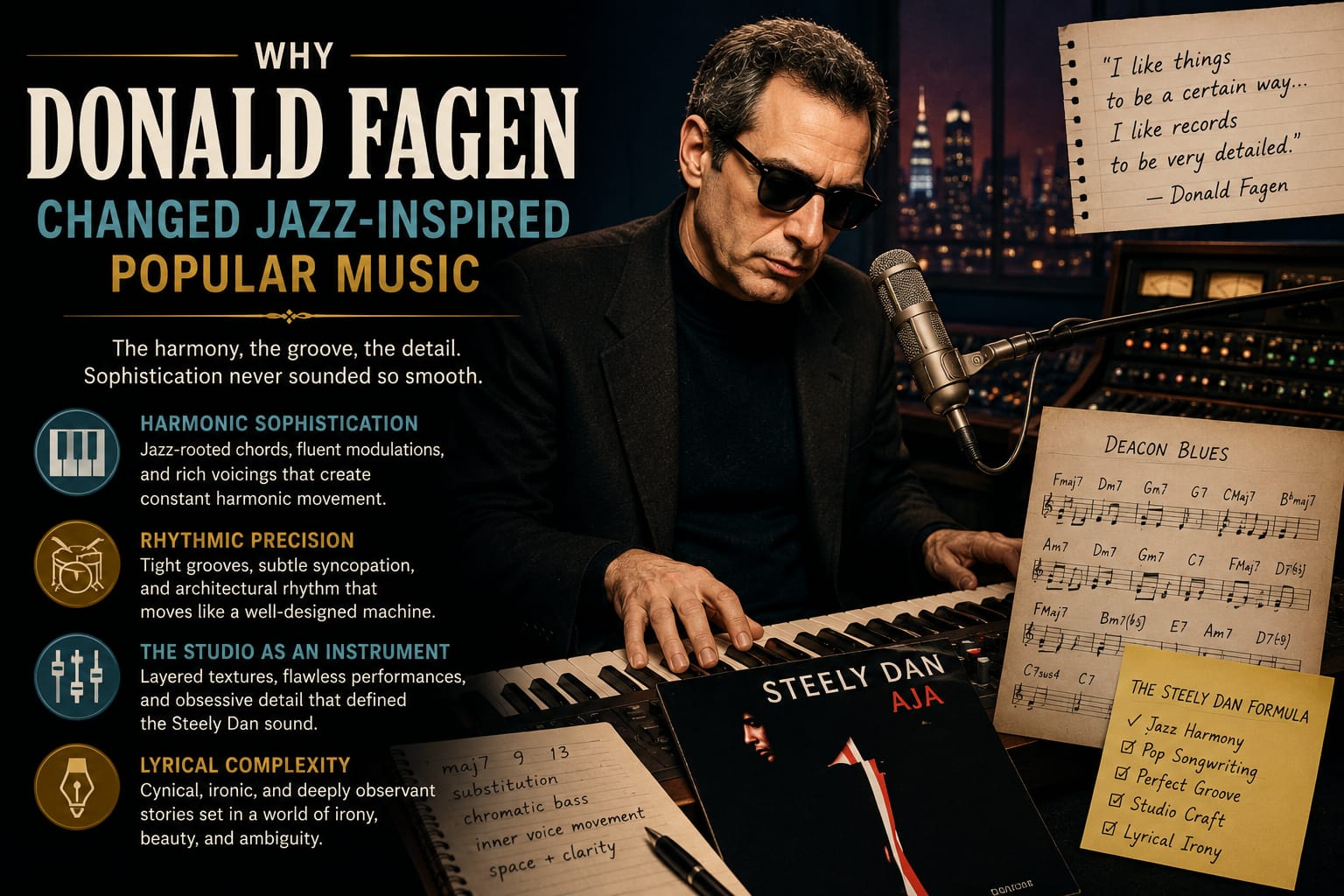
Why Donald Fagen Changed Jazz-Inspired Popular Music

Donald Fagen performing with electric piano and studio equipment surrounded by jazz-inspired harmonic textures

Donald Fagen occupies a unique place in modern music history. While many artists successfully blended jazz and pop elements, very few achieved the level of harmonic sophistication, rhythmic precision, and production detail that Fagen developed through Steely Dan and his solo work. What makes his music remarkable is not simply technical complexity, but the way … Read more

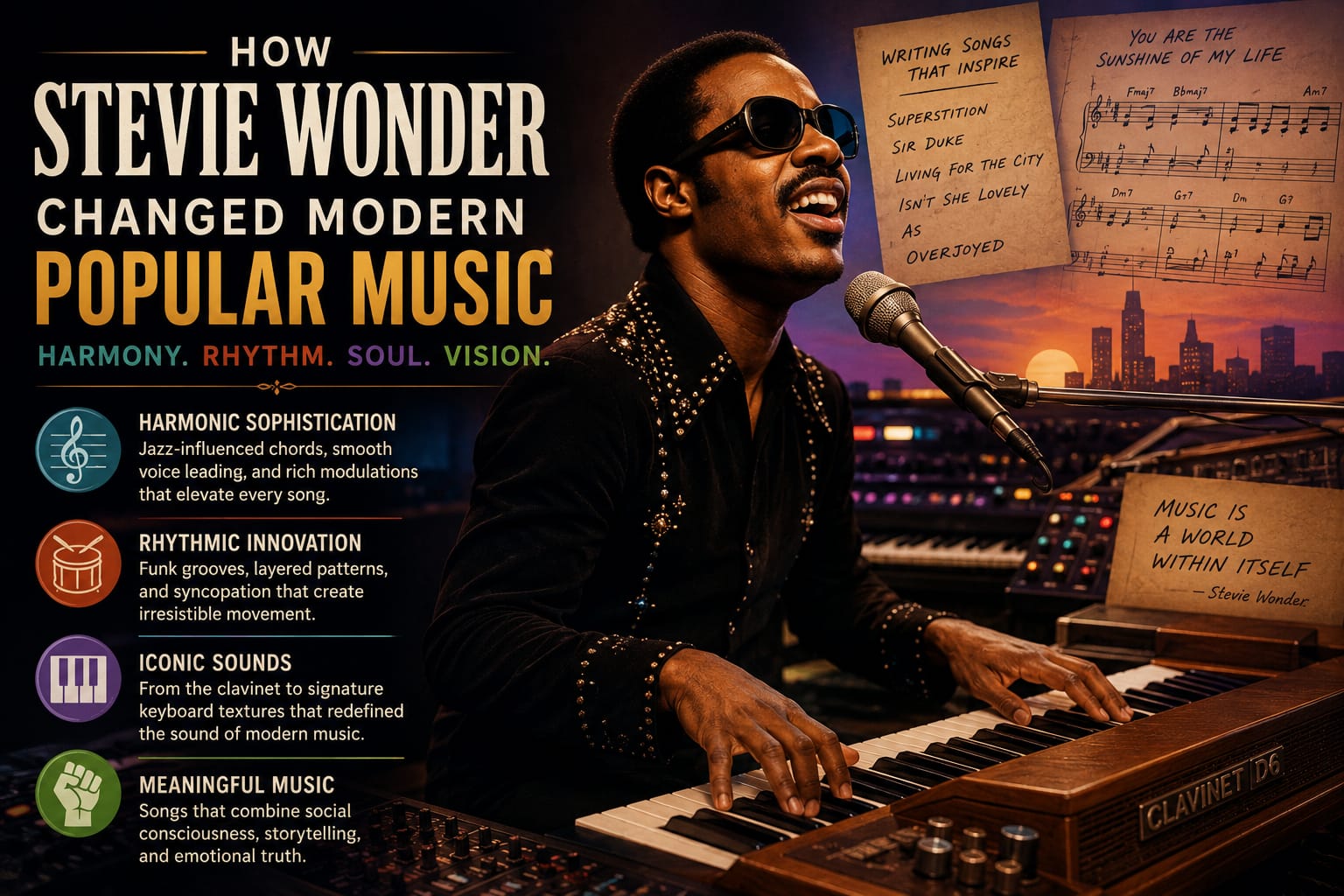
How Stevie Wonder Changed Modern Popular Music Through Harmony and Rhythm

Stevie Wonder performing surrounded by keyboards and colorful studio lights representing groove and harmonic creativity

Stevie Wonder is often described as a soul musician, songwriter, or pop icon, but those labels barely capture the depth of his musical language. What makes his work extraordinary is not only the emotional sincerity of his songs, but the sophistication hidden beneath their accessibility. Very few artists have managed to combine advanced harmony, rhythmic … Read more

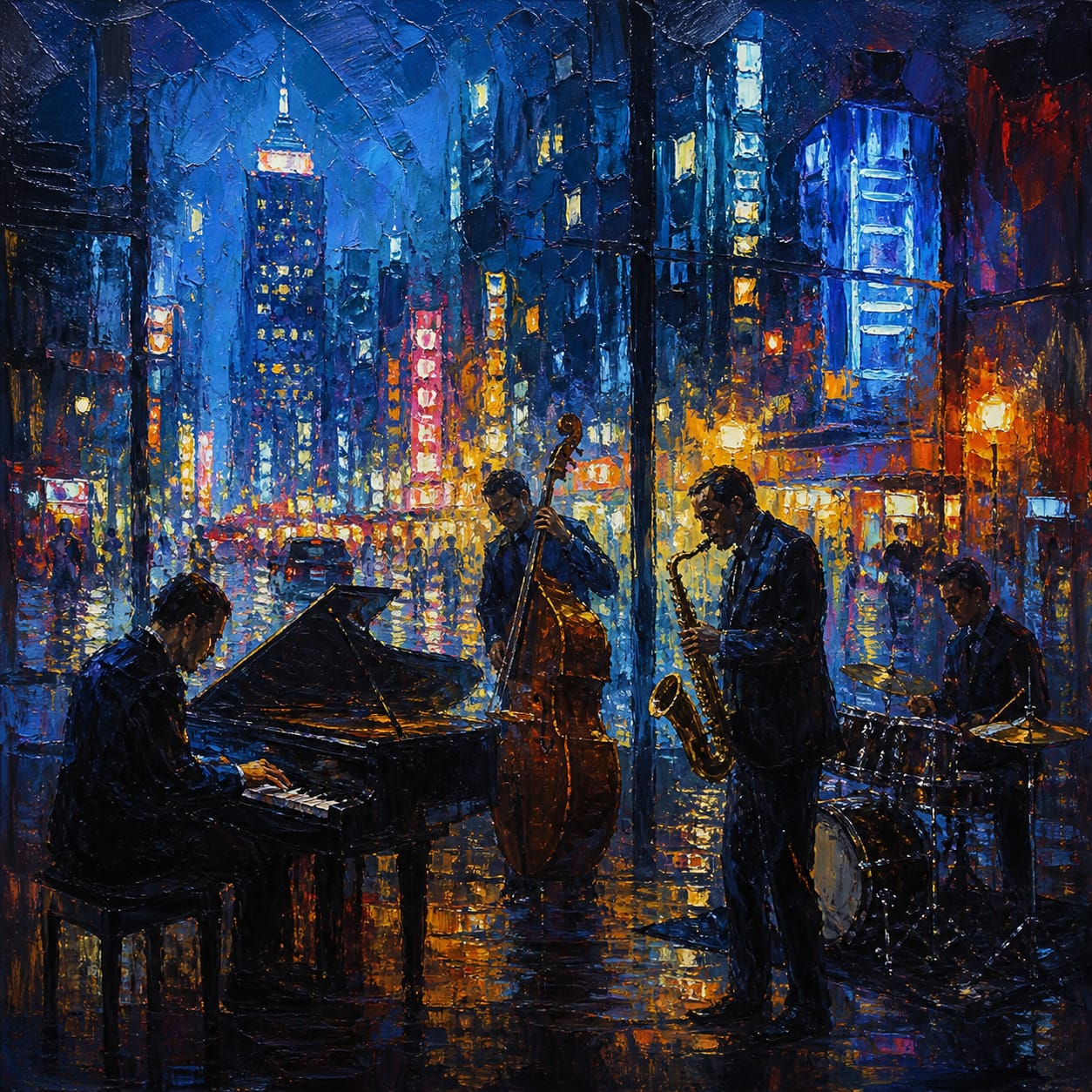
About the Blue Side of Neon Light — Inside the Composition

jazz ensemble composition groove rhythm neon city night music harmonic cycles

Orchestral composition process What does a night in the city sound like when everything is in motion? This article explores my orchestral composition process through the piece “About the Blue Side of Neon Light”. About the Blue Side of Neon Light, from the album Urban Nightlife Stories, captures the energy and brightness of a night … Read more

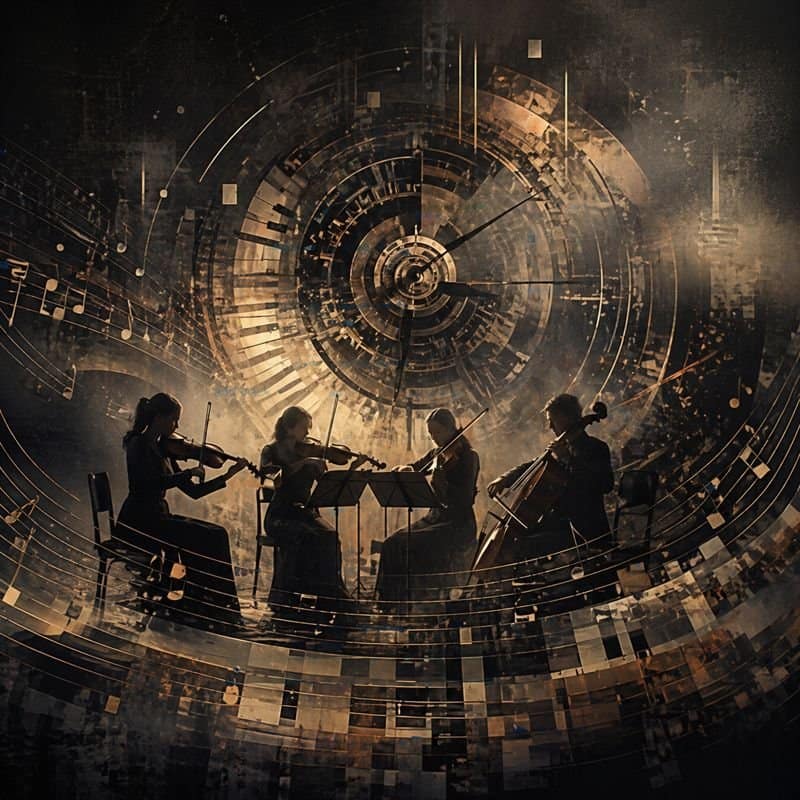
The Machine That Was in a Hurry — Inside the Composition

arpeggio string quartet composition rhythmic tension musical motion abstract music structure

Orchestral Composition Process What does urgency sound like when it never accelerates? The Machine That Was in a Hurry explores tension built through continuous motion rather than speed. It uses continuous arpeggiation to create tension through repetition and harmonic instability. Originally written for piano and vibraphone (2021), and later adapted for string quartet in the … Read more

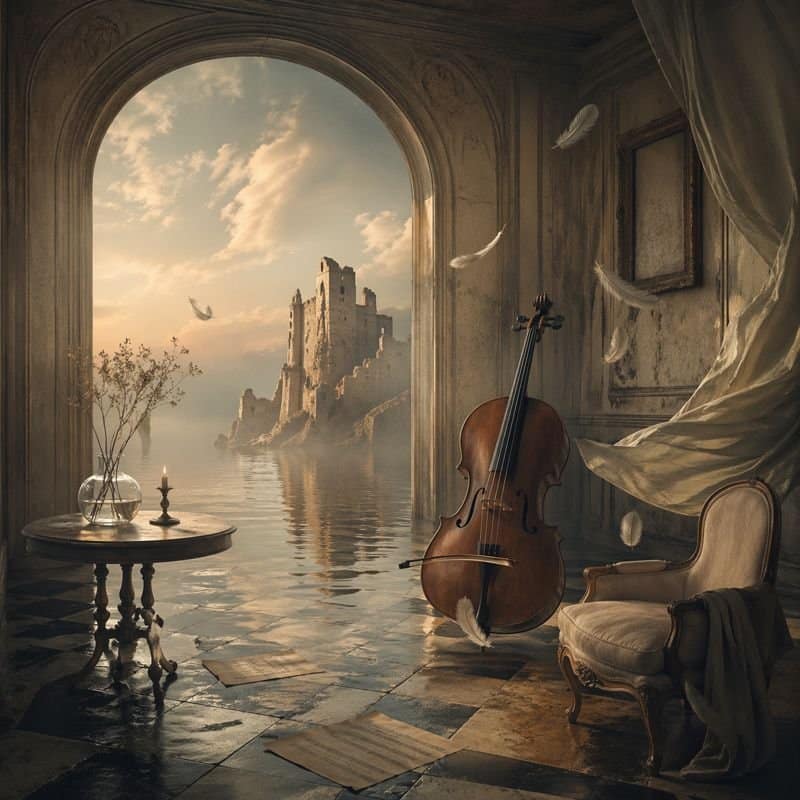
Rest Room — Inside the Composition

calm orchestral composition pizzicato strings harmonic rhythm minimal texture music

Orchestral composition process What does musical stillness sound like when it is not completely at rest? Rest Room, from the album Forgotten Castle, represents a moment of pause within the narrative: a space of calm inside a larger structure shaped by memory and time. Rather than stillness, the piece explores controlled tranquility—a quiet environment sustained … Read more

Inside “Crossroad Mood”

urban night orchestral composition rhythmic pattern traffic motion music abstraction

Orchestral composition process This article explores my orchestral composition process through the piece “Crossroad Mood”. The music does not settle. It keeps moving. What does a stressful night drive through a city sound like? Crossroad Mood, from the album Urban Nightlife Stories, captures a tense and restless journey through a city at night.. Rather than … Read more

White Lament — Inside the Composition

Melancholic orchestral composition tango rhythm fragmented melody white lament

This article explores my orchestral composition process through the piece “White Lament”. What does a restrained lament sound like? White Lament explores melancholy through repetition, gesture, and suspended harmony. The piece does not express emotion directly—it suggests it through interruption and repetition. White Lament explores a restrained form of melancholy: not dramatic, but contained and … Read more

Spiral Stairway — Inside the Music

orchestral score spiral stairway circular motion harmonic oscillation composition

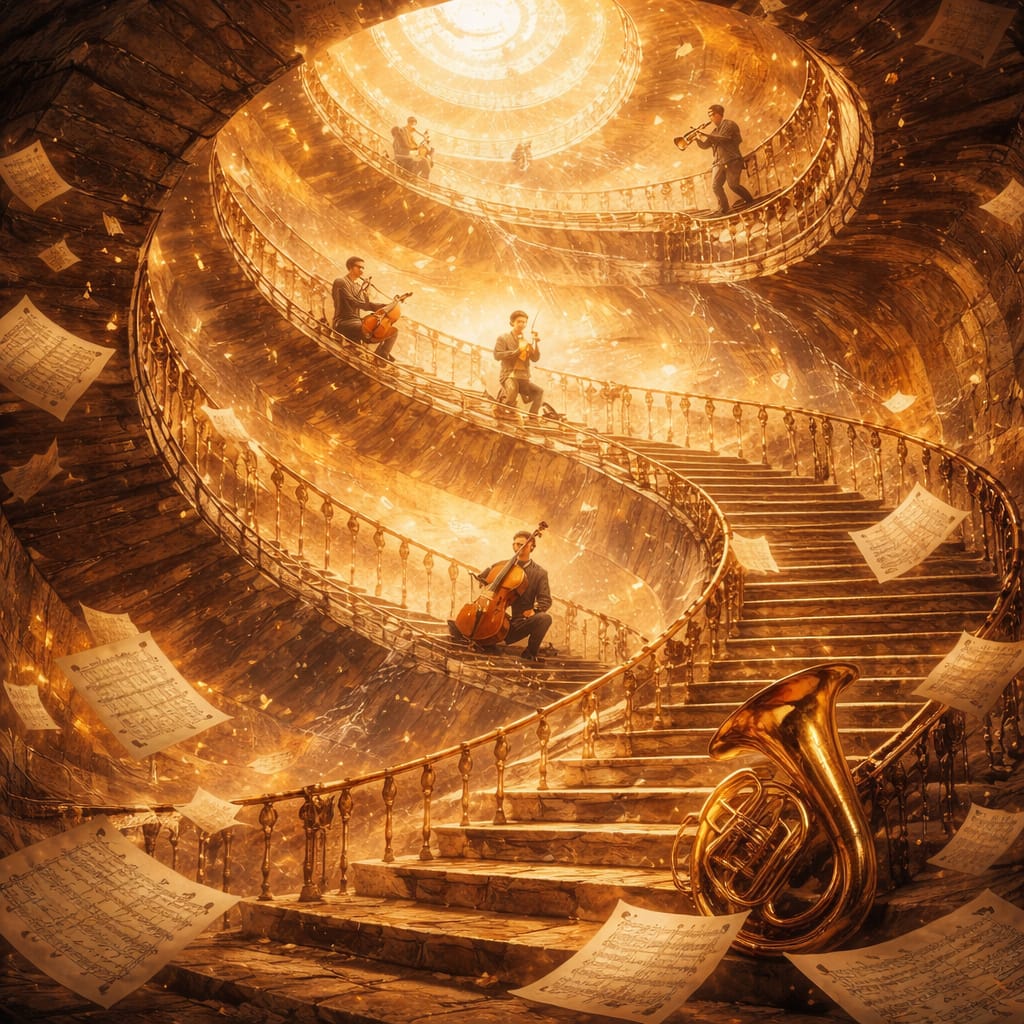
Orchestral composition process This article explores my orchestral composition process through the piece “Spiral Stairway”. Spiral Stairway explores the idea of circular movement: not linear progression, but continuous ascent without a clear beginning or end. Originally written for piano and cello, and later arranged for brass quintet in Brassing Reflections, the piece translates a visual … Read more

September — Inside the Composition

orchestral score september low register rhythmic motif composition

Orchestral composition process What does the beginning of autumn sound like? September explores the subtle shift between cycles, using repetition and low-register rhythm to represent the passage of time. Originally written for piano, cello, and clarinet, and later arranged for woodwind quintet in Woodwinds Blowing, the piece explores the idea of cyclical time—how seasons return, … Read more

Old Stone and Vines — Inside the Composition

orchestral composition process using harmonic transformation in string quartet

Orchestral composition process I tried to remove harmonic direction completely. But every progression I wrote kept pulling the music forward. The challenge in Old Stone and Vines was not how to move — but how to avoid moving, while still changing. Part of the album Forgotten Castle, the piece reflects the present state of the … Read more

Parade — Inside the Composition

orchestral score parade rhythmic motif semiquaver composition

Orchestral composition process What does a musical celebration sound like? This article explores my orchestral composition process through the piece “Parade”. It captures the energy of a crowd as knights pass through the castle, transforming movement and rhythm into a continuous musical flow. Part of the album Forgotten Castle, inspired by the castle of Astúlez, … Read more

How I Composed “Stained Glass”

stained glass surreal colorful light kaleidoscope orchestral composition

How do you translate light into music? Stained Glass is built as a constantly shifting texture, where rhythm and harmony behave like fragments of colored light. It explores a visual idea translated into sound: the experience of looking at stained glass windows from inside a church. Light passes through shifting colors and shapes, constantly transforming—never … Read more

Where Did They Go? — Inside the Composition

Where Did They Go orchestral composition alien mystery surreal scene

Where Did They Go? explores a different psychological layer within Gateway, a Psychological Introspection: not discovery, but uncertainty after discovery. GATEWAY: A PSYCHOLOGICAL INTROSPECTION (album) by Pilpil Music Listen while reading — this piece is built around a recurring unresolved motif. The piece reflects a fundamental question raised in Frederik Pohl’s novel: if the alien … Read more

The Piano’s Resonant Wood: Understanding the Vital Role of the Soundboard

The Structure of a Grand Piano The grand piano is a remarkable instrument characterized by its sophisticated design and construction, which play a crucial role in sound production. At the core of this elegant instrument lies a robust frame that supports numerous components, including the strings, hammers, and most importantly, the soundboard. The structure of … Read more

The Discovery — Composition breakdown

the discovery article

The Discovery opens the album Gateway, a Psychological Introspection and represents a decisive moment: the encounter with the unknown. Inspired by the novel Gateway by Frederik Pohl, the piece reflects the discovery of an asteroid containing alien transportation technology—something both fascinating and deeply unsettling. GATEWAY: A PSYCHOLOGICAL INTROSPECTION (album) by Pilpil Music The Core Idea … Read more

Hourglass — Inside the Music

Hourglass - How to article

Hourglass is built around a simple idea: time that doesn’t move forward, but loops endlessly. Instead of a clear beginning and destination, the piece explores repetition, subtle change, and suspended motion—like sand continuously falling inside an hourglass. HOURGLASS by Pilpil Music The Core Idea From the very first bars, the piano establishes a continuous ostinato … Read more