Matter Magnifier — Inside the Music

Matter Magnifier piano and cello score by Pilpil Music

How a Small Musical Idea Becomes Something Larger Matter Magnifier is one of the pieces included in Piano & Cello Junction, my 2022 album exploring the expressive possibilities of piano and cello as a two-instrument chamber ensemble. The piece is built around a simple compositional idea: magnification. The title refers to the way a small … Read more

Jellyfish Waltz — Inside the Music

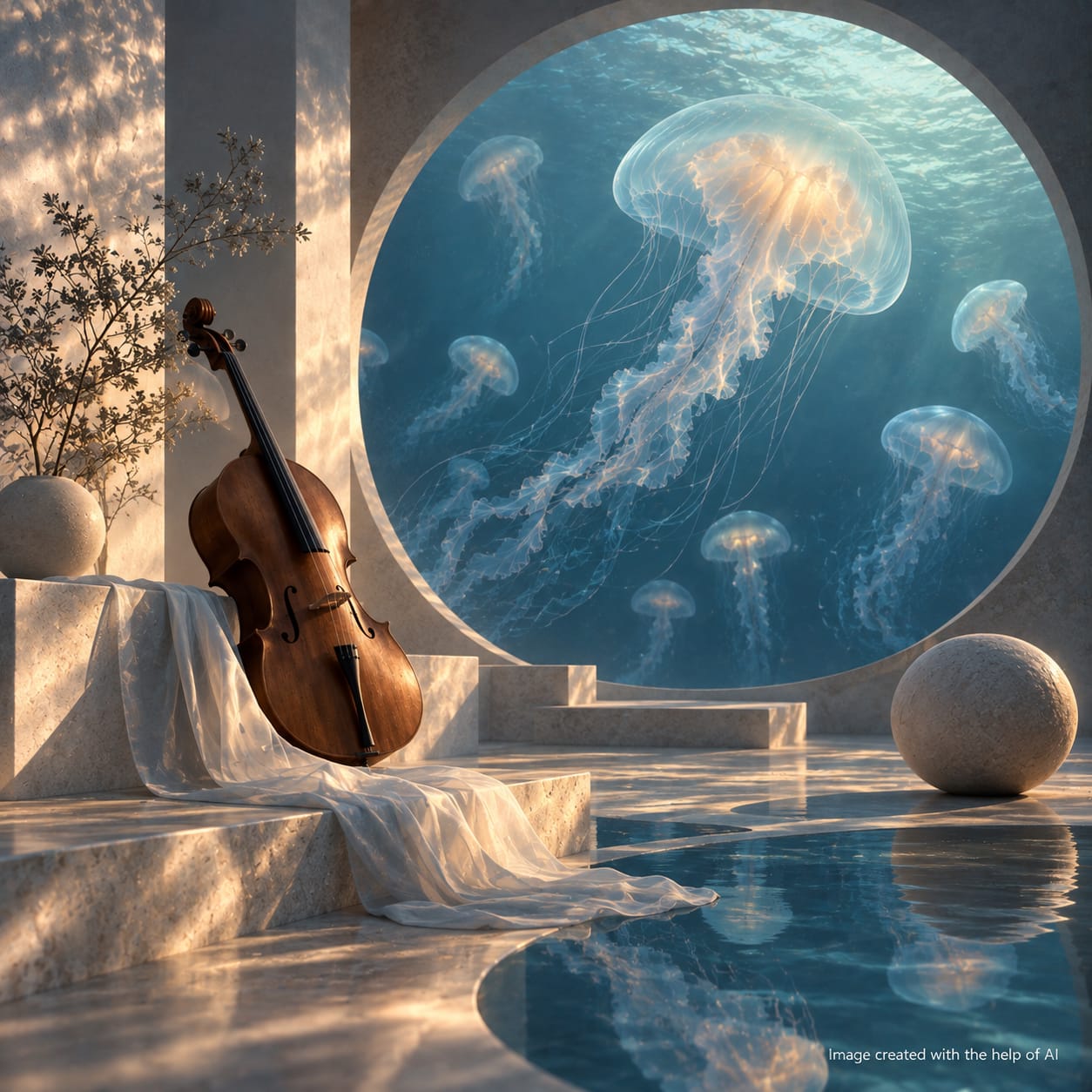
Jellyfish waltz article image

Turning the slow movement of jellyfish into a string quintet Some musical ideas begin with a story, a person or a specific place. Others begin with an image. Jellyfish Waltz, from Faces & Places, began with the latter: the almost weightless movement of jellyfish drifting through water. The image is simple, but translating it into … Read more

Silent Frame — Inside the Music

Silent frame article image

The quiet ending of Faces & Places Every album has a final moment. Sometimes it is a conclusion; sometimes it is simply the point at which the music stops. With Silent Frame, the closing piece of Faces & Places, I wanted the ending to feel different: not dramatic, not conclusive, but quietly hopeful. After the … Read more

Salt Air Memories — Inside the Music

Salt air memories - article

How memory, harmony and string texture become a musical landscape What does a memory of the sea sound like when it is no longer a precise image, but a collection of sensations? Salt Air Memories, from the album Faces & Places, explores that question through a string quintet texture built around repetition, harmonic transformation and … Read more

Beginning — Inside the Music

Beginning article

Composition process This article explores my compositional process through the piece Beginning. Beginning explores the emotional landscape of a new start: hope, uncertainty, expectation, and the gradual emergence of confidence. Originally written in 2021 for string ensemble and vibraphone, and later reimagined for brass quintet in 2026 as an additional piece for Brassing Reflections, the … Read more

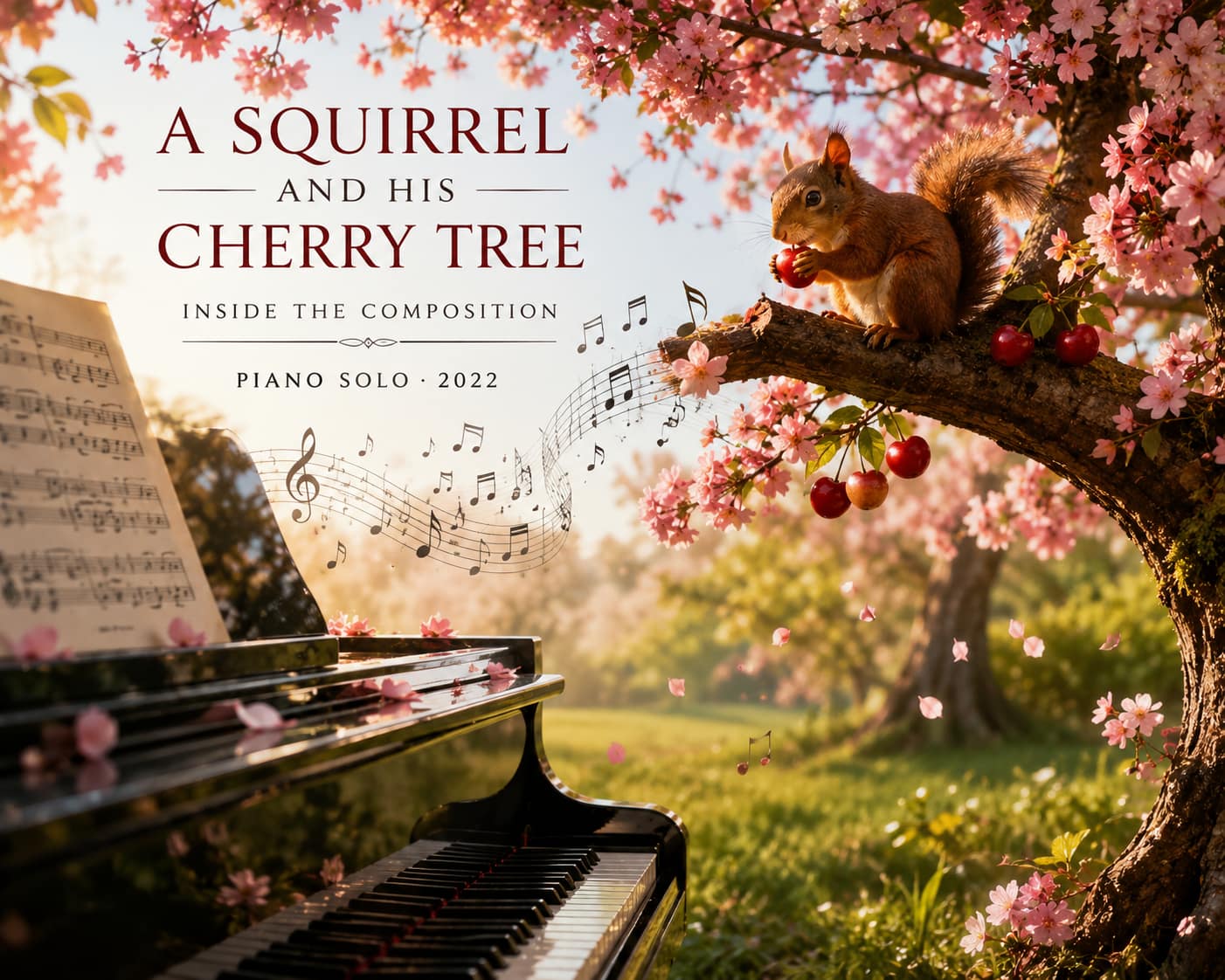
A Squirrel and His Cherry Tree — Inside the Composition

playful piano composition rhythmic motion minimalist neoclassical music

A Squirrel and His Cherry Tree, released in 2022 for solo piano, explores movement, playfulness, and rhythmic vitality through repetitive patterns and bright harmonic motion. The piece is built around a strong rhythmic pulse that remains active almost continuously. Rather than lyrical introspection, the music focuses on agility, momentum, and the unpredictable energy of constant … Read more

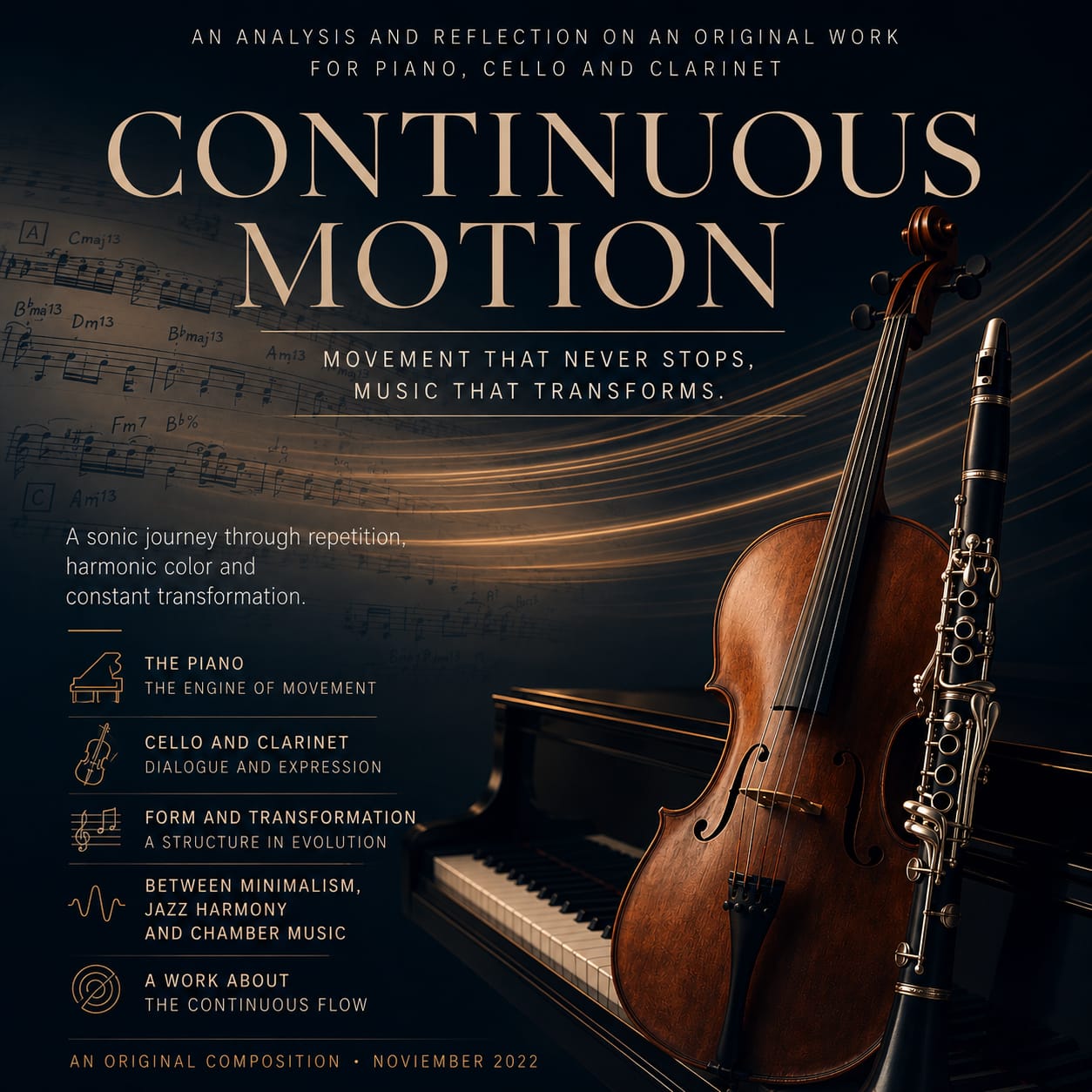
Inside the Music: Continuous Motion

Cover artwork for the article “Inside the Music: Continuous Motion”, featuring piano, cello and clarinet with flowing musical textures and contemporary chamber aesthetics.

There are compositions born from melody, others from harmony, and some from rhythm. Continuous Motion emerged from movement itself: the idea of a musical current that never completely settles, always advancing, transforming, breathing. Written in November 2022 for piano, cello and clarinet, the piece explores repetition, gradual harmonic shifts and the tension between stability and … Read more

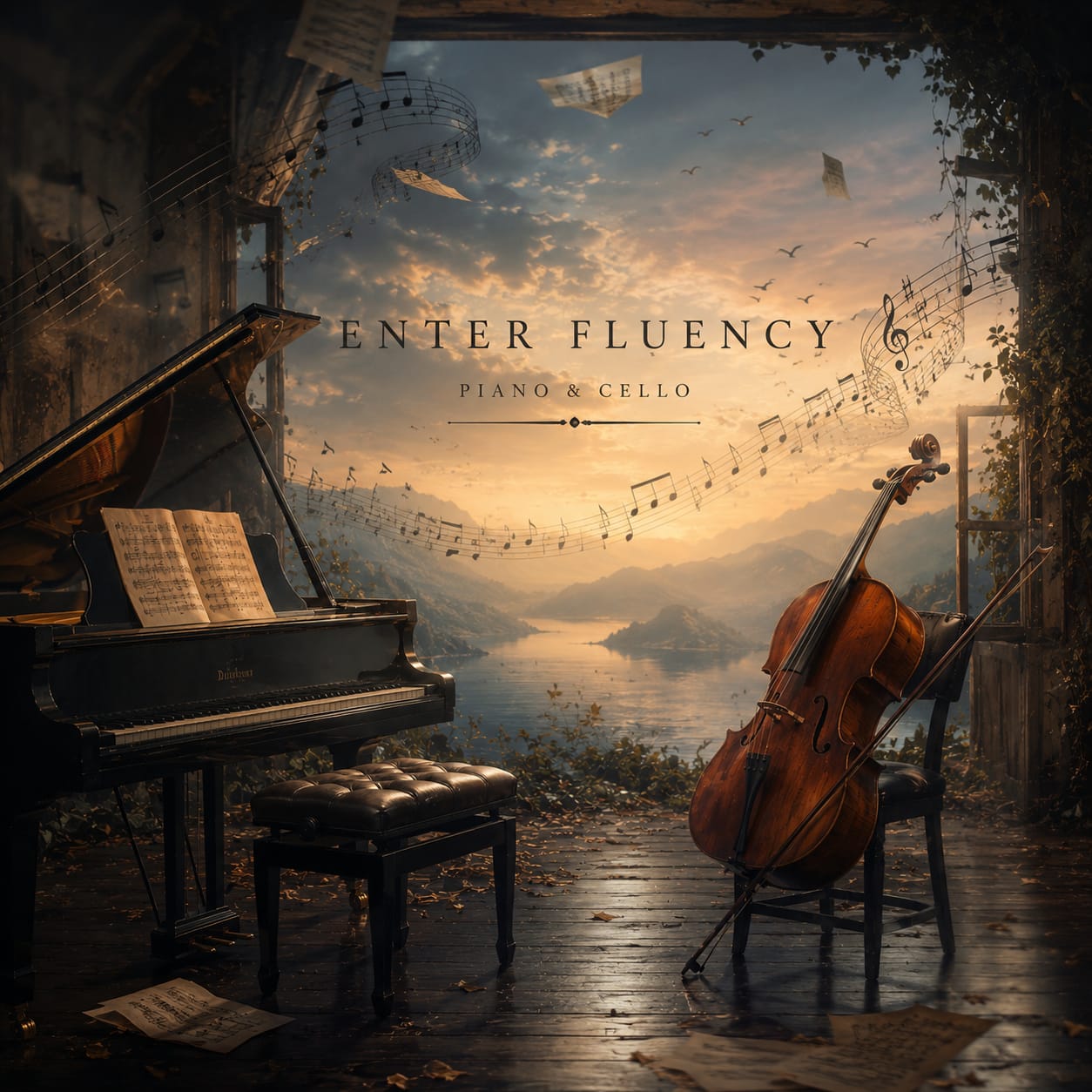
Enter Fluency — Inside the Composition

piano cello continuous motion harmonic flow chamber music composition

Enter Fluency, originally released for solo piano in 2022 and later adapted for piano and cello in the album Piano & Cello Junction, explores continuity through perpetual motion and harmonic transformation. The piece is built around flowing arpeggiated movement that constantly evolves while maintaining a stable pulse. Rather than dramatic thematic development, the music focuses … Read more

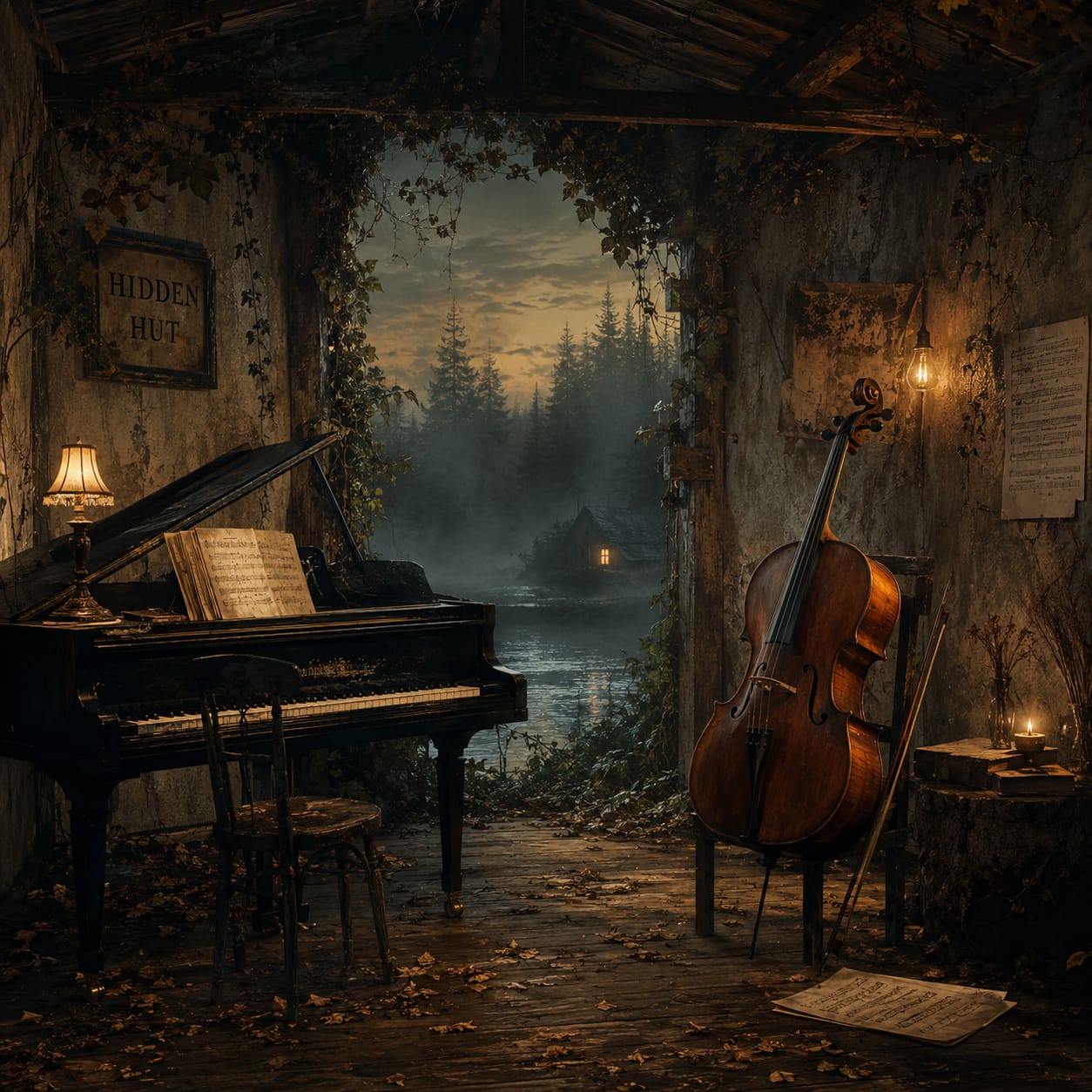
Hidden Hut — Inside the Composition

piano cello chamber music hidden atmosphere harmonic suspension minimalist composition

Hidden Hut, originally released for solo piano in 2022 and later adapted for piano and cello in the album Piano & Cello Junction, explores stillness, distance, and hidden spaces through harmonic suspension and gradual motion. Unlike tension-driven works, this piece focuses on containment. The music moves carefully, as if revealing a place that remains partially … Read more

Why Donald Fagen Changed Jazz-Inspired Popular Music

Donald Fagen performing with electric piano and studio equipment surrounded by jazz-inspired harmonic textures

Donald Fagen occupies a unique place in modern music history. While many artists successfully blended jazz and pop elements, very few achieved the level of harmonic sophistication, rhythmic precision, and production detail that Fagen developed through Steely Dan and his solo work. What makes his music remarkable is not simply technical complexity, but the way … Read more

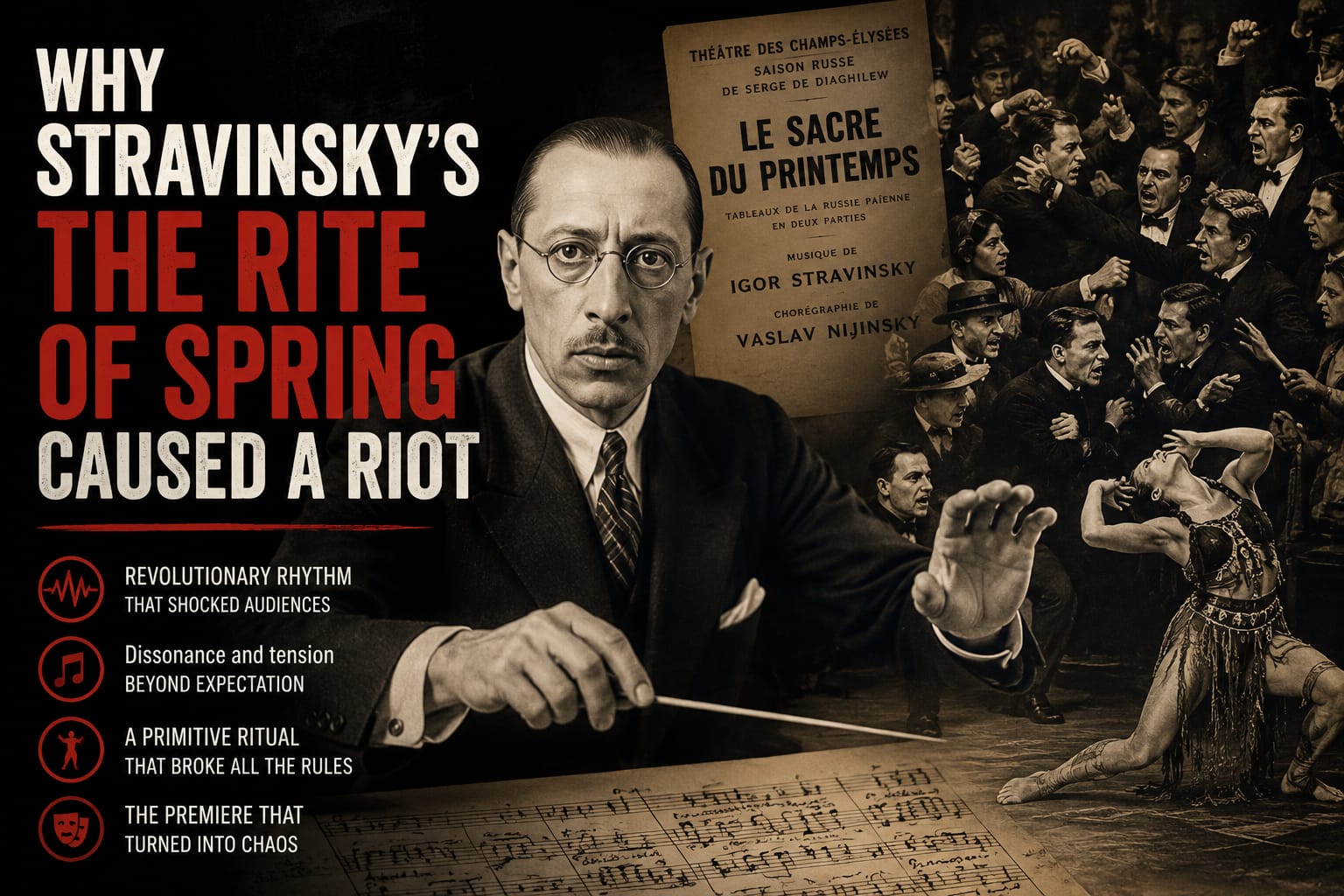
Why Stravinsky’s The Rite of Spring Caused a Riot

Igor Stravinsky conducting The Rite of Spring during a chaotic theatrical performance

Few premieres in music history have become as legendary as the first performance of Igor Stravinsky’s The Rite of Spring in Paris on May 29, 1913. What began as a ballet performance quickly turned into chaos: shouting, insults, arguments, and near physical fights erupted inside the theater. Today, the story is almost mythical. But the … Read more

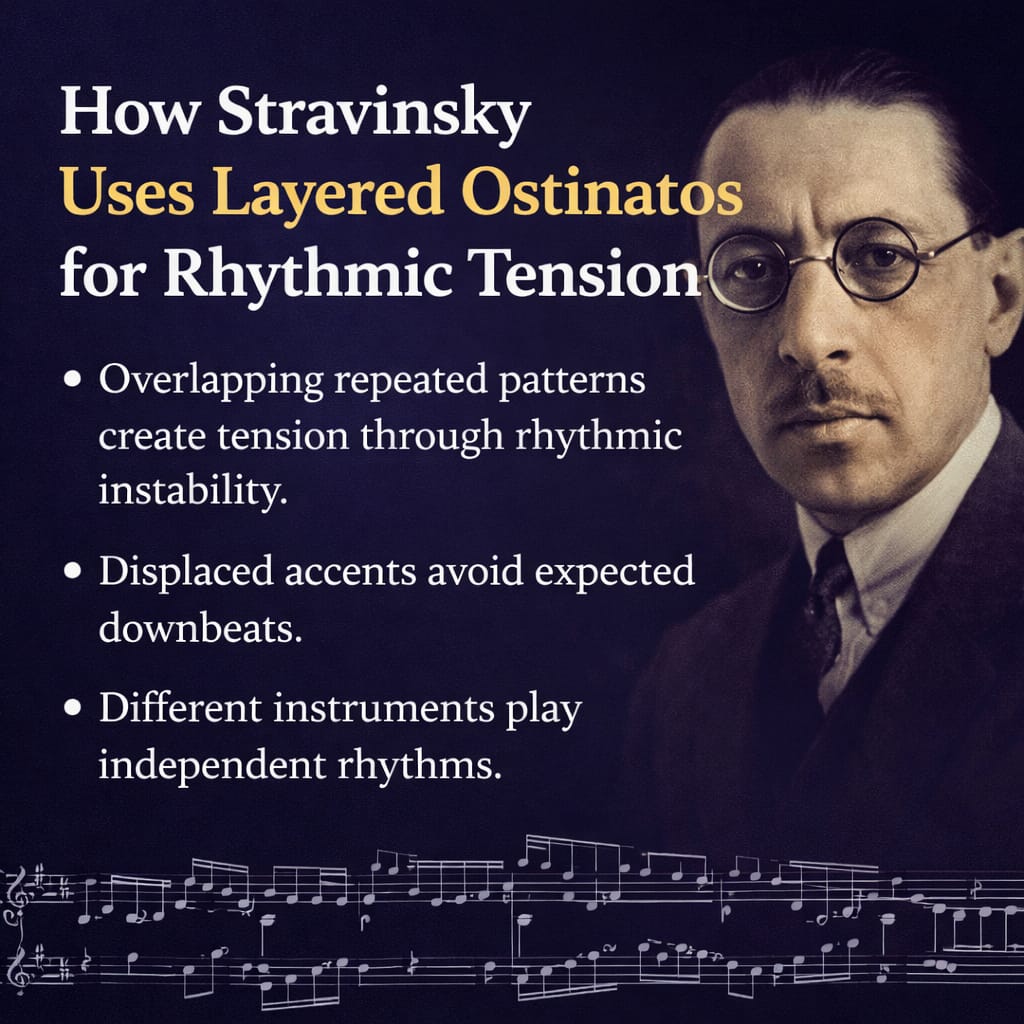
How Stravinsky Builds Rhythmic Tension with Layered Ostinatos

Stravinsky image article

Stravinsky’s Layered Ostinatos Explained Stravinsky’s rhythmic language is built on layered ostinatos that interact in complex and often unpredictable ways. Understanding this technique is key to analyzing works like The Rite of Spring. Understanding Rhythmic Tension in Stravinsky’s Music One of the most powerful rhythmic techniques in Stravinsky’s music is the use of layered ostinatos. … Read more