
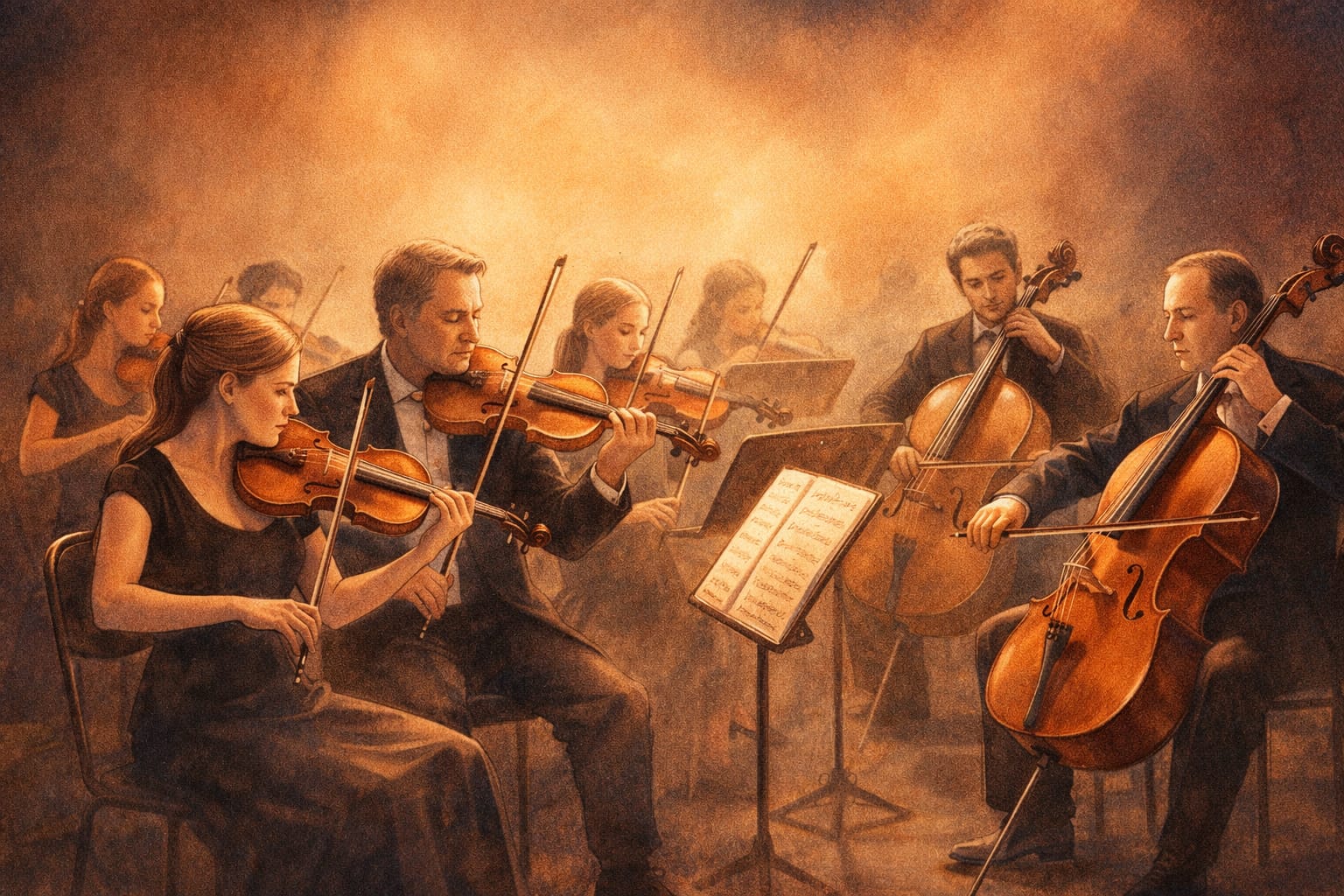
Among all instrumental families, strings possess a remarkable capacity for emotional expression. Their ability to sustain sound, shape phrases with subtle dynamics, and move seamlessly between registers makes them one of the most versatile resources for composers. Writing for a string ensemble offers an opportunity to explore a wide palette of colors, textures, and expressive possibilities.
For many composers, including myself, string ensembles are often the starting point for musical ideas that require warmth, lyricism, or emotional depth. Some of my own pieces—such as Idoya, Beginning, The Abbot, or Toys—explore different expressive possibilities of string writing, ranging from calm and meditative atmospheres to more dramatic and energetic passages.
The Natural Expressiveness of Strings
The expressive potential of string instruments comes primarily from the way sound is produced. Unlike instruments that generate sound through fixed mechanical actions, string players continuously shape the tone through bow movement, pressure, and vibrato.
This means that even a single sustained note can contain subtle variations in intensity and color. A melody played by a violin or cello can gradually expand, breathe, and evolve, creating a sense of organic movement that feels almost vocal in nature.
Because of this flexibility, strings are particularly effective when the music requires long lyrical lines or gradual emotional development.
Melody as the Emotional Core
When writing expressive music for string ensemble, melody often becomes the central element. A well-shaped melodic line can carry much of the emotional weight of a piece.
Instead of relying on complex technical gestures, expressive melodies often benefit from clarity and natural phrasing. Long arcs, stepwise motion, and carefully placed leaps can create a sense of direction and emotional continuity.
In several of my string compositions, the melody is allowed to unfold slowly above a supportive harmonic texture. This approach allows the listener to focus on the expressive character of the musical line without unnecessary complexity.
The goal is not virtuosity for its own sake, but emotional communication.
Harmony and Atmosphere
Harmony plays an equally important role in shaping the expressive environment of a string piece. Because string ensembles can sustain chords with great smoothness, harmonic progressions can unfold gradually and naturally.
One effective technique is to allow the harmony to move slowly beneath a melodic line. Subtle harmonic changes can significantly influence the emotional color of the music, even if the melodic material remains simple.
In many of my compositions, the process begins with a harmonic progression that establishes the overall mood of the piece. Only after this harmonic foundation is defined does the melody begin to take shape.
This approach helps ensure that the melodic line grows naturally from the harmonic context.
The Role of Texture
Another important aspect of writing for strings is texture. A string ensemble can produce a wide variety of textures, from transparent two-voice writing to dense multi-layered harmonies.
One common approach is to create a supportive accompaniment beneath the melody using repeated patterns or sustained harmonic layers. These background textures help maintain motion while allowing the main musical line to remain clear and expressive.
Different combinations of instruments can produce very different sonic results. For example:
- violins can carry the melodic line with brightness and clarity
- violas often provide inner harmonic warmth
- cellos can support the harmony or introduce lyrical counter-melodies
- double basses reinforce the harmonic foundation
By carefully balancing these elements, the ensemble can produce a rich but transparent sound.
Dynamics and Phrasing
Expressive string writing depends heavily on dynamics and phrasing. Small dynamic changes can dramatically influence how a musical phrase is perceived.
Gradual crescendos and decrescendos are particularly effective in string music because the instruments can sustain sound while continuously shaping its intensity.
Similarly, phrasing plays a key role in creating musical direction. Long phrases that breathe naturally often feel more expressive than short fragmented gestures.
In many cases, the emotional impact of a passage comes not from the notes themselves but from the way they are shaped over time.
Articulation and Color
Articulations also contribute significantly to expressive writing. String instruments offer a broad range of bowing techniques that can transform the character of a musical line.
For example:
- legato passages create smooth, flowing lines
- staccato notes introduce lightness or rhythmic energy
- pizzicato can add contrast or playful character
- tremolo can generate tension or atmosphere
Even subtle changes in articulation can alter the emotional quality of a passage.
When orchestrating a piece for strings, it is often useful to think of articulation as part of the expressive vocabulary of the music rather than merely a technical instruction.
Balance Within the Ensemble
Achieving balance between the different sections of the ensemble is essential. If the accompaniment becomes too dense, the melody may lose clarity. On the other hand, overly sparse textures may lack harmonic support.
A good string arrangement often alternates between fuller ensemble moments and more transparent passages. This contrast keeps the texture alive and allows different musical ideas to emerge naturally.
Sometimes a melody that begins in the violins may later appear in the cellos or violas, creating variety while maintaining continuity.
Emotional Narrative
Expressive music often follows an emotional narrative. Even without lyrics, a piece can suggest a journey or a sequence of emotional states.
String ensembles are particularly well suited for this kind of musical storytelling. Through gradual changes in harmony, texture, and dynamics, the music can move from calm reflection to tension and eventually toward resolution.
For example, a piece may begin with a quiet, introspective melody, gradually build toward a more intense central section, and finally return to a calmer atmosphere.
This type of structure helps guide the listener through the emotional landscape of the composition.
Final Thoughts
Writing expressive music for string ensemble is ultimately about understanding how sound, motion, and emotion interact. Strings offer a unique combination of flexibility, warmth, and dynamic control that allows composers to shape music with great subtlety.
By focusing on melody, harmony, texture, and phrasing, it is possible to create music that communicates deeply even with relatively simple materials.
For me, composing for strings remains one of the most rewarding ways to explore musical expression. The ensemble provides a rich palette of colors and an extraordinary capacity to convey emotion through sound alone.
If you would like more information on these topics, explore the following related posts: