
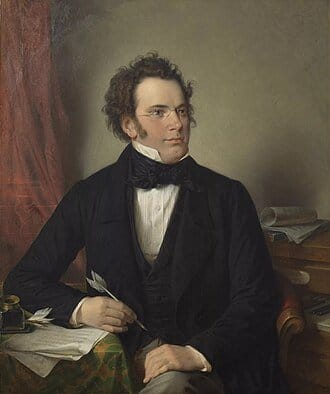
Understanding Schubert: A Brief Biography
Franz Schubert was born on January 31, 1797, in Vienna, Austria, into a modest and musical family. His father was a schoolmaster, which provided Schubert with a structured upbringing that welcomed education and the arts. Early exposure to music was significant, as Schubert began singing in the choir at St. Stephen’s Cathedral and later took piano lessons, allowing him to cultivate a profound understanding of musical structures.
Schubert’s formal education in music began at a young age. Despite his lack of extensive formal training, he was notably skilled in composing and was able to create a substantial body of work during his lifetime. These early years saw him influenced by various composers and styles, which played a crucial role in shaping his unique sound. Though Schubert faced health challenges and the confines of a traditional educational system, his passion for music never waned.
Throughout his adolescent years, Schubert developed relationships with several key figures in the Viennese music scene, including fellow composers and poets. These interactions were vital in shaping his artistic identity. The friendly environment of the ”Schubert Circle” presented opportunities for him to share and refine his work. The collaborative nature of these interactions allowed him to experiment with new ideas and solidify his reputation as a composer of lieder and symphonic works. Schubert’s life was punctuated by social anxiety, which often hindered his interactions despite his artistic brilliance. Nonetheless, his writing vividly expressed intimate emotions, resonating deeply with his audiences.
This blend of personal experiences, including his upbringing in Vienna, familial influences, and musical collaborations, essentially formed the foundation of Schubert’s enduring legacy. His contributions to the realm of classical music remain celebrated, illustrating the complexity of a genius marked by both brilliance and insecurity.
The Role of Schubertiades
In the early 19th century, Schubertiades emerged as informal gatherings that significantly influenced Franz Schubert’s artistic pursuits. These events were composed of fellow musicians, poets, and close friends who shared a passion for art and music. Typically hosted in private residences, these gatherings provided a platform for Schubert to showcase his compositions, which included songs, chamber music, and piano works. The intimate nature of Schubertiades allowed for a candid exchange of artistic ideas and fostered a supportive community around Schubert’s work.
Performances and Social Dynamics
During the Schubertiades, the performances were often unstructured, with guests participating willingly. This informal setting enabled a more free-spirited approach to music-making, in stark contrast to the more formal concert environments of the time. Musicians and attendees could come together, collaboratively interpreting Schubert’s pieces. This fostered a sense of camaraderie, yet it also gave rise to a set of social expectations that could be overwhelming for Schubert.
Expectations and Anxiety
As a composer deeply aware of his social surroundings, Schubert often felt anxious about the expectations that these gatherings generated. The intimate atmosphere, while comforting, came laden with the pressure to perform and impress his peers. The duality of enjoying the communal spirit while grappling with anxiety represents a profound aspect of Schubert’s inner life. The praise he received could be uplifting, yet the fear of disappointing those present often weighed heavily on him. Thus, the Schubertiades encapsulated the tension between his creative expression and the crippling effects of social anxiety, providing a significant context for understanding a shy genius navigating the complexities of social interaction while contributing richly to the world of music.
Social Anxiety and Artistic Expression
Franz Schubert is often hailed as one of the greatest composers of the early Romantic era, yet his social anxiety profoundly influenced his creative output. This anxiety manifested in various ways, shaping both his personal interactions and his compositional style. Shyness can limit an artist’s exposure to public trust and critical reception, thereby intensifying the emotional depth within their work. Schubert’s reluctance to engage in social situations directed his focus inward, compelling him to explore themes of isolation, longing, and introspection in his music.
The connection between Schubert’s social anxiety and his artistic expression can be illustrated through several notable anecdotes. Reports indicate that he would often leave social gatherings abruptly, overwhelmed by the attention or the expectations placed upon him. These hasty exits were not merely a rejection of social interaction; they signified a protective mechanism born from his anxiety. As a result, Schubert frequently preferred solitude, where he could immerse himself in creativity without the pressure of public expectation. This solitude led to the creation of poignant works that reflect profound emotional narratives, resonating with audiences in ways that were both personal and universal.
Moreover, this withdrawal from the spotlight allowed Schubert to cultivate a unique compositional voice. His piano sonatas, lieder, and symphonic works often depict a complex interplay of joy and melancholy, which invites listeners to experience the full spectrum of human emotion. His ability to craft such rich emotional landscapes is arguably a direct reflection of his lived experiences with anxiety and the resultant need for emotional exploration. The depth of feeling expressed in his music gives insight into how social anxiety can fuel creativity, ultimately resulting in artistic accomplishments that speak to the heart of the human condition.
Legacy of Schubert’s Anxiety: An Unfinished Symphony
Franz Schubert, a composer of remarkable talent, left behind an extensive body of work that continues to inspire and evoke emotions in audiences around the world. However, this genius was deeply influenced by his own struggles with social anxiety, a condition that shaped not only his life but also his compositions. Schubert’s personal challenges fostered a profound introspection reflected in the themes of longing and unfulfilled desire present in his music. This emotional landscape provides a compelling context for understanding how his anxiety informed the depth of his artistry.
Throughout his life, Schubert dealt with feelings of isolation and vulnerability that often permeated his interactions with peers and the broader artistic community. This sentiment is echoed in several of his well-known works, which express a yearning for connection and a sense of existential melancholy. For instance, his “Unfinished Symphony” serves as a poignant metaphor for the unresolved aspects of his life and mental state. The symphony, incomplete yet powerful, parallels his own struggle with personal and artistic fulfillment, leaving listeners pondering what could have been.
The exploration of mental health within the arts has gained recognition over the years, drawing parallels between artistic expression and personal turmoil. Schubert’s legacy is a testament to the notion that creativity often emerges from the depths of personal challenges, suggesting a complex interplay between anxiety and genius. As society increasingly acknowledges the importance of mental health, Schubert’s narrative encourages a broader understanding of how such struggles can significantly contribute to the richness of creative output. This reinforces the idea that while social anxiety may have inhibited Schubert in various ways, it simultaneously catalyzed his extraordinary musical achievements, ensuring that his works remain timeless and relatable.
If you would like more information on these topics, explore the following related posts: