
The Friendship of Mozart and Haydn
The relationship between Wolfgang Amadeus Mozart and Joseph Haydn is frequently regarded as one of the most important collaborations in the history of classical music. Their friendship was not only foundational to their personal lives but also significantly influenced their compositions, leading to a profound mutual respect that spanned decades. Although Haydn was ten years older than Mozart, their camaraderie exemplified how two distinct musical minds can flourish together.
Both composers shared a dedication to the development of classical music, adhering to the evolving styles of their era while also innovating within the framework of established norms. Haydn is often credited with pioneering the symphonic form, while Mozart’s genius in melody and harmony added a fresh, vibrant perspective. This symbiotic relationship drove each artist to expand their capabilities and challenge their own artistic boundaries. For instance, it is recorded that Haydn had a significant impact on the formation of Mozart’s chamber music, encouraging him to explore new textures and forms.
The friendship between Mozart and Haydn also extended to personal interactions, characterized by mutual admiration and support. They enjoyed socializing together, sharing intellectual discussions about music and life, which further solidified their bond. This friendship is particularly documented in letters exchanged between the two, emphasizing their respect and the admiration they held for each other’s work. Mozart’s famous dedication of his string quartets to Haydn is a testament to the profound influence Haydn had on his music. Through their collaborations and support for one another, both composers significantly shaped their respective careers, leaving an indelible mark on the world of music that resonates even today.
The Devilishly Difficult Piano Piece
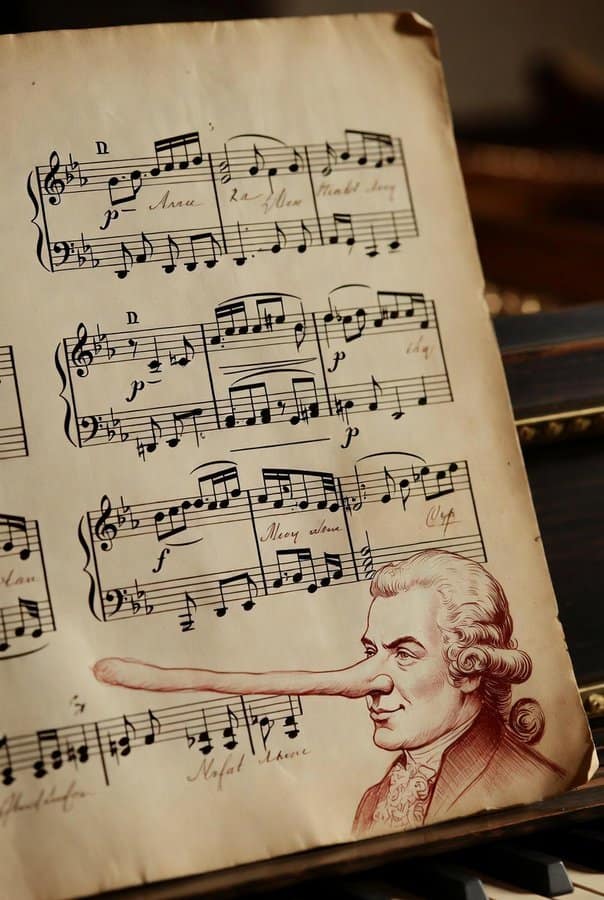
One of the most notable compositions attributed to Mozart, specifically crafted for his esteemed friend Joseph Haydn, is recognized not only for its melodic beauty but also for its formidable technical challenges. This piece, often cited in discussions about difficult piano works, demands a rare combination of dexterity, agility, and strength from the performer. The distinctive feature that sets this composition apart from others is the requirement to play a note situated in the center of the keyboard while simultaneously stretching the hands to their outer limits.
From a musical notation standpoint, the piece is replete with complex rhythms and intricate passages that test the pianist’s timing and precision. The pianist is required to navigate rapid scale passages, octave jumps, and a variety of articulations that enrich the texture of the music. The challenging nature of this composition is further amplified by its dynamic contrasts, demanding not just technical prowess but also a sensitive interpretation of the dynamics and phrasing.
A careful analysis of the score reveals how Mozart ingeniously incorporated these technical elements to enhance the playability while pushing the boundaries of the performer. The intricate counterpoint featured in the piece requires not only technical skill but also an ability to balance the melodic lines against each other, all while executing the physically demanding stretches. For aspiring pianists, mastering this piece serves as both an impressive achievement and a testament to their dedication and practice. Ultimately, the combination of technical and interpretative challenges solidifies this work’s reputation as a devilishly difficult piano piece, one that continues to captivate and challenge pianists around the world.
The Legendary Nose Technique
One of the most amusing and well-circulated anecdotes from the life of Wolfgang Amadeus Mozart involves his use of an unconventional method to produce music: playing a note with his nose. This event, often recounted with a mix of disbelief and laughter, showcases not only Mozart’s playful personality but also his unparalleled musical prowess. The context surrounding this peculiar act is essential for understanding how it reflects the composer’s inherent creativity and sense of humor.
This humorous incident likely occurred during a time when Mozart was known for his jovial spirit, often engaging with friends and family in lighthearted banter. It is believed that the legendary nose technique was improvised during a social gathering, perhaps as a playful challenge or a spontaneous demonstration of his musical ingenuity. Such playful antics were not uncommon for the composer, highlighting his ability to blend artistry with entertainment.
The tale of Mozart’s nose technique has transcended the boundaries of time, becoming a significant part of musical folklore. Musicians, historians, and even casual fans of his work often share this anecdote as a testament to his unique character. It serves as a reminder that the great composers of history were also human beings who exhibited quirks and idiosyncrasies that endeared them to those around them. The lighthearted nature of this story contrasts sharply with the intense emotional depth found in Mozart’s compositions.
Ultimately, the legendary nose technique exemplifies the dual aspects of Mozart’s persona: his exceptional talent and his whimsical outlook on life. This intertwining of humor and genius has had a lasting impact on how subsequent generations perceive not only Mozart’s music but also his vibrant personality, ensuring that the composer remains a beloved figure in both the world of classical music and popular culture.
Legacy of Humor in Classical Music
The incorporation of humor in classical music is evident in the works of numerous composers, with Wolfgang Amadeus Mozart often serving as the quintessential example. The anecdote surrounding Mozart’s nose, a humorous yet enlightening moment in his relationship with Joseph Haydn, underscores how composers infused levity into their artistry. This playful exchange not only showcases their camaraderie but also highlights how humor can enhance the creative process.
Humor in music composition frequently manifests in various forms, such as musical puns, absurdities, and ironic contrasts. These elements can provide relief from the seriousness that often characterizes traditional classical works. For instance, the playful motifs in Mozart’s operas, such as Die Entführung aus dem Serail and Die Zauberflöte, are rich with comical undertones, allowing audiences to engage with the music on both intellectual and emotional levels. Such artistic decisions contribute to the timelessness of his compositions, demonstrating how humor can create poignant connections between the work and its listeners.
Beyond Mozart, humor has been a recurring theme among various classical composers. Ludwig van Beethoven often included whimsical elements in his compositions, notably in his Symphony No. 9, where an unexpected transition brings a light-heartedness to a grand orchestral work. Similarly, Igor Stravinsky’s The Soldier’s Tale employs humor to tell a complex story, intertwining comedic aspects with serious themes. Through these examples, it becomes clear that humor serves not only as a vehicle for entertainment but also as a means of fostering deeper relationships between musicians and their audience.
Ultimately, the legacy of humor in classical music remains robust and multifaceted. It invites listeners to experience musical narratives that transcend mere entertainment, offering a glimpse into the lively dynamics of the composer’s world. As illustrated by the anecdote of Mozart and Haydn, humor can be an essential aspect that immortalizes the relationships and creative spirit of classical music’s enduring figures.
If you would like more information on these topics, explore the following related posts: