
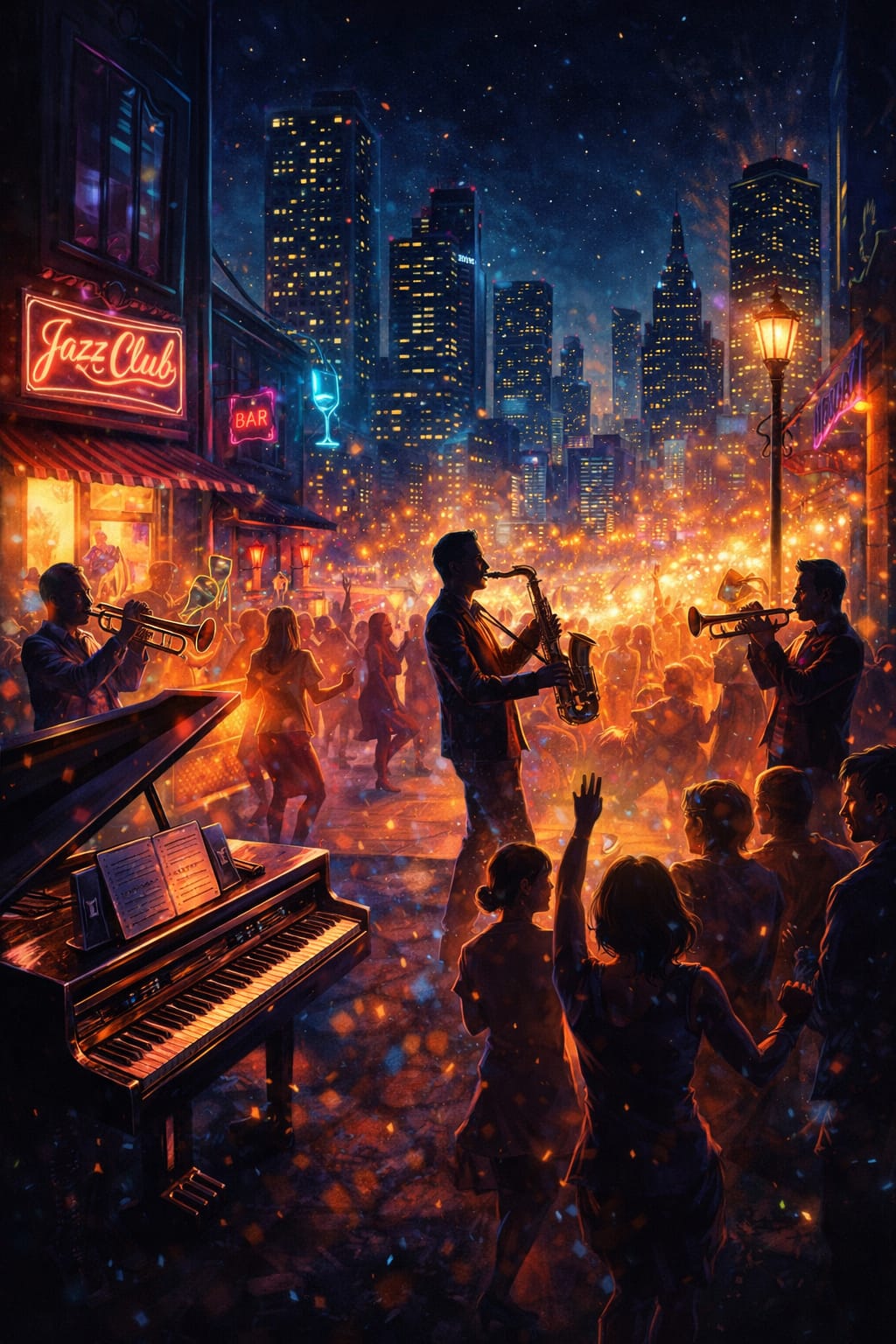
Some compositions are driven by introspection or atmosphere, while others emerge from a more direct and spontaneous musical impulse. Dancing Where We Belong, included in the album Urban Nightlife Stories (2025), belongs clearly to the second category. It is a piece that captures a specific moment: the joy of meeting friends at night in a familiar place, where music, movement, and connection come together naturally.
The goal of the piece was to reflect that feeling of belonging — not in a reflective or nostalgic way, but through energy, rhythm, and a sense of shared experience.
This piece shows how a simple funky piano motif can evolve into a full instrumental composition.
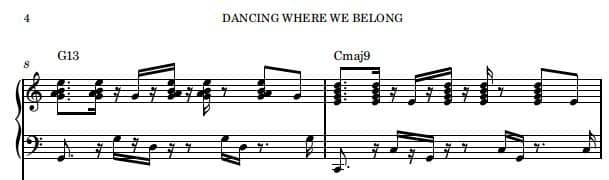
The Initial Spark: A Funky Piano Motif
The origin of the piece was a funky piano motif that I came across while exploring musical ideas online. It was not a complete composition, but a short rhythmic and harmonic gesture that immediately suggested a groove and a direction.
What made this motif interesting was its rhythmic character. It had a natural sense of movement and syncopation, which made it ideal for building a piece around it. Instead of treating it as a simple idea to discard, I decided to develop it further and integrate it into my own compositional language.
This motif, combined with a chord progression, became the foundation of the piece.
Building Section A: Groove and Identity
From that initial idea, I constructed the main section of the piece — what can be understood as section A.
The piano motif was adapted and placed in an electric piano sound, which immediately situates the piece within a more urban and contemporary sonic context. The electric piano provides both rhythmic clarity and harmonic support, functioning as the core of the texture.
On top of this harmonic-rhythmic base, I introduced a melody played by soprano saxophone. The choice of instrument was deliberate: the soprano sax has a bright and expressive timbre that works well for conveying a sense of lightness and joy.
The melodic line is intentionally simple and direct. Its role is not to create complexity, but to reinforce the positive and energetic atmosphere of the piece.
Harmonic Reinforcement: Brass Section
To enrich the harmonic texture, I added trombone and trumpet. These instruments do not dominate the musical discourse, but they play an important supporting role.
They reinforce the harmonic progression and add depth to the arrangement. Their presence also contributes to the stylistic identity of the piece, connecting it with elements of jazz, funk, and urban music.
The interaction between electric piano, saxophone, and brass creates a balanced texture where rhythm, harmony, and melody coexist clearly.
The Emotional Context: Urban Nightlife
The piece is strongly connected to the concept of the album Urban Nightlife Stories. Each track in the album represents a different moment or scene within the experience of the city at night.
In this case, Dancing Where We Belong reflects a very specific situation: arriving at a familiar place, meeting friends, and feeling immediately part of the environment. There is no tension or conflict here — only energy, movement, and shared enjoyment.
This emotional clarity is reflected in the music:
- steady groove
- bright harmonic colors
- clear melodic direction
Everything is oriented toward creating a sense of ease and connection.
Section B: Contrast and Interlude
After establishing the main groove and thematic material, the piece introduces a contrasting section (B).
This section functions as an interlude. It momentarily moves away from the main rhythmic and harmonic identity, offering contrast in both texture and mood.
The intensity is slightly reduced, and the musical material becomes more open. This creates a brief sense of distance before returning to the main section.
Structurally, this contrast is essential. Without it, the piece would risk becoming too static. The B section allows the listener to reset their perception before the return of the main idea.
Return and Variation
Following the interlude, the music returns to section A, but not as a simple repetition. Instead, there are variations in the melodic material and arrangement.
These variations keep the music alive and prevent the structure from feeling predictable. Small changes in phrasing, articulation, or instrumentation provide freshness while maintaining coherence.
This approach reflects a general principle in my composition process: repetition is important, but it must always be accompanied by subtle transformation.
Rhythm as the Driving Force
One of the defining elements of Dancing Where We Belong is its rhythmic foundation. The original piano motif establishes a groove that remains central throughout the piece.
Unlike more atmospheric compositions, where harmony or texture may dominate, here the rhythm is the primary driver. It shapes the identity of the piece and supports the overall sense of movement.
This rhythmic consistency is what allows the piece to feel grounded and accessible, while still leaving room for variation and development.
Instrumentation and Character
The choice of instrumentation plays a crucial role in defining the character of the piece.
- Electric piano → rhythmic and harmonic foundation
- Soprano saxophone → melodic expression and brightness
- Trumpet and trombone → harmonic reinforcement and stylistic color
Together, these elements create a sound world that is clearly connected to urban, jazz-influenced, and groove-based music.
The instrumentation is not overly dense, which allows each element to remain clear and contribute effectively to the overall texture.
Final Thoughts
Dancing Where We Belong is a piece built on a simple but effective idea: a rhythmic-harmonic motif that captures a specific emotional moment.
By developing this idea into a structured form with contrast and variation, the piece becomes more than just a groove. It becomes a musical representation of a shared experience — the feeling of being in the right place, with the right people, at the right time.
Within the context of Urban Nightlife Stories, the track functions as one of the most direct and accessible moments of the album. It reflects the lighter side of nightlife: not tension or introspection, but connection, rhythm, and enjoyment.
Ultimately, the piece shows how a small musical idea, when placed in the right context and developed with clarity, can become a complete and meaningful composition.
Stories Behind the Music
Explore the creative process behind some of the tracks from Urban Nightlife Stories. These articles reveal how each piece was conceived, developed, and shaped into its final form: Dancing where we belong
If you would like more information on these topics, explore the following related posts: