
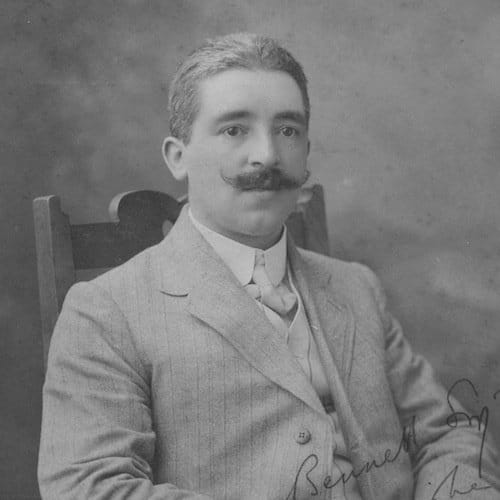
Introduction to Havergal Brian and the Gothic Symphony
Havergal Brian (1876–1972) remains one of the most fascinating figures in British symphonic music. Largely self-taught and working outside the traditional musical establishment, Brian produced an extraordinary catalogue of more than thirty symphonies along with numerous orchestral and chamber works.
Among them, Symphony No. 1 – the “Gothic” Symphony stands as his most ambitious creation. Completed in 1919 and later revised, the work did not receive its first full performance until 1961. Its scale alone places it among the largest symphonic works ever conceived.
Yet the Gothic Symphony is not remarkable merely for its size. It represents a bold attempt to expand the symphonic form into something monumental, combining orchestral, choral, and spiritual elements into a single vast musical structure.
The Structure and Composition of the Gothic Symphony
The Gothic Symphony is divided into two major parts.
Part I – Instrumental Symphony
The first part follows a more traditional symphonic structure consisting of three movements. Here Brian establishes the core thematic material of the work.
The orchestral language is dense and dramatic. Large brass sections dominate the sonic landscape, while the strings provide sweeping gestures and powerful harmonic foundations. The writing often evokes the symphonic tradition of Mahler and Bruckner, yet Brian’s harmonic language is more volatile and unpredictable.
Sudden shifts in texture and dynamic contrasts create an atmosphere of tension and grandeur.
Part II – Choral Symphony
The second part expands the work into something far beyond a conventional symphony.
Brian introduces:
- multiple choirs
- children’s choir
- solo vocalists
- pipe organ
- expanded orchestral forces
The text is taken from the Te Deum, transforming the symphony into a vast choral fresco. Here the music alternates between overwhelming choral climaxes and quieter passages of spiritual contemplation.
The result is a musical architecture of almost cathedral-like proportions.
Performance Challenges and Requirements
Performing the Gothic Symphony is a logistical challenge rarely encountered in the orchestral repertoire.
The work requires:
- an enormous orchestra
- multiple choirs
- vocal soloists
- pipe organ
- additional brass bands
In some performances the number of performers can exceed 200 musicians.
For conductors, the greatest challenge lies not only in managing the forces involved but also in maintaining structural clarity across a work of such monumental scale. Coordination between choirs, orchestra, and soloists requires exceptional rehearsal planning and precise musical leadership.
Because of these demands, performances of the Gothic Symphony remain rare events in the concert world.
Legacy and Influence of the Gothic Symphony
Although initially overlooked, the Gothic Symphony has gradually gained recognition as one of the most daring orchestral projects of the twentieth century.
Its sheer ambition challenged the boundaries of the symphonic genre. Later composers exploring large-scale choral symphonies and monumental orchestral structures inevitably encountered Brian’s work as a reference point.
Today the Gothic Symphony occupies a unique position within the repertoire: part symphony, part sacred oratorio, and part visionary artistic statement.
For listeners and performers alike, it remains one of the most extraordinary symphonic experiments ever attempted.
If you would like more information on these topics, explore the following related posts: